Plum vs Simplifi by Quicken
Side-by-side comparison — pricing, features, ratings, use cases. Find which Budgeting Apps fits you best.

💰 Pricing
- Plum Premium costs £2.99/month or £29.99/year; approx $3.80/month or $38.00/year.
- Plum Ultra costs £4.99/month or £49.99/year; approx $6.35/month or $63.50/year.
- Investment platform fee: 0.45% p.a. on Free, 0.35% p.a. on Premium, 0.25% p.a. on Ultra.
- No bank sync fees – accounts are linked via Open Banking at no cost.
- No family or couple plans; each account is priced individually.
- Investment fees include platform fee only; underlying fund charges (OCF) still apply.
- Plum Card may charge foreign transaction fees if used abroad – check the cardholder terms.
- Savings interest rates are variable and can change after your first year.
- Early withdrawal fees may apply if you link investments to certain providers; not for standard savings.
🔧 Features
📋 Assessment
💪 Strengths
- The AI-powered auto-save is intelligent: it learns your income and spending patterns and automatically moves money into savings when you can afford it. You can choose from gentle, balanced, or aggressive modes, and set a savings goal. This makes building a savings habit effortless, as the app does the heavy lifting without you having to remember to transfer funds.
- Open banking integration is smooth and secure. Plum connects to over 80 UK banks (including NatWest, Barclays, HSBC, etc.) and uses FCA-regulated providers. You can view all your accounts in one place, and Plum can also analyze your spending to offer insights (though basic insights are limited on free tier). This saves time and gives you a holistic view of your finances.
- Round-ups are simple and effective. Plum rounds up your daily purchases to the nearest pound and transfers the spare change into savings. You can also opt to 'round-up and invest' directly into a fund, making it a great way to start investing with tiny amounts. This feature is particularly appealing for beginners who want to dip their toes into the market.
- Bill comparison and switching is a practical money-saver. Plum compares your energy, broadband, and insurance providers and will switch you to a better deal, supposedly saving an average of £300-400 a year. This is proactive and helps reduce outgoings, which is a core part of budgeting. The service is included in the free tier (though switching fees may apply if you're on the free plan).
- The free tier is genuinely useful. You get access to auto-save, round-ups, basic analytics, and even a 'Plum' debit card (issued by M&S Bank) for no monthly fee. For many casual savers, this is all they need. Upgrading to Plus or Ultra adds features like cashback offers, additional interest on savings, and advanced insights, but the core value doesn't require spending a penny.
⚠ Watch out for
- Exclusively UK-only: You must have a UK bank account and be a UK resident to use the open banking integration and open a Plum account. This excludes expats, non-UK residents, or anyone with a foreign bank account. The app also isn't available on Android in some older versions? Actually, it's on both iOS and Android, but the limitation remains.
- The auto-save algorithm isn't perfect: Despite being 'smart', it can sometimes transfer more than you expect, leaving your current account lower than comfortable. However, you can set daily or weekly limits, and you can stop or pause auto-save at any time. But for those on a tight budget, it might require monitoring.
- Advanced features are paywalled: The most attractive features (higher interest rates, full analytics, investment in individual stocks) sit behind the subscription. For example, the 4.3% AER variable interest on savings (as of 2024) is only available on Plum Ultra; the free tier gets don't or a lower rate. Investing also has an annual fee (varies) which adds to the subscription cost.
- Customer support is limited: Plum primarily offers support via email and in-app chat. There's no phone support. Response times can be slow, especially during peak times. Some users report delays in resolving issues, particularly around account closure or transactions. For a money app, this can be frustrating.
- No full budgeting features: Plum excels at savings and investing, but it's not a full budgeting app. You can see how much you spend per category, but you can't create custom budgets or get detailed breakdowns like YNAB or Emma. If you want a comprehensive budgeting tool, Plum may fall short.
🎯 Best for
UK residents who want a low-effort, automated way to save spare cash and invest small amounts without leaving a single app.
🚫 Who should skip
Non-UK users, serious DIY investors, or people who need advanced budgeting controls like zero-based budgeting or custom budget categories.
📚 Learning curve
Minimal – the app guides you through linking a bank account and setting basic rules; most features can be used immediately without tutorials.
🧑⚖️ Verdict
Plum is an excellent choice for UK residents who struggle to save or want to begin investing with small amounts, thanks to its automated AI savings and user-friendly features. However, if you need a comprehensive budgeting tool, have a non-UK bank account, or prefer deep customer support, you should
💰 Pricing
- Annual plan: $47.88/year (effectively $3.99/month), billed upfront.
- Monthly plan: $5.99/month.
- No additional fees for bank synchronization or transaction import.
- 30-day free trial with no credit card required.
- Automatic renewal at full annual rate after trial period ends.
- Price may increase with prior notice; no price lock for existing subscribers.
🔧 Features
📋 Assessment
💪 Strengths
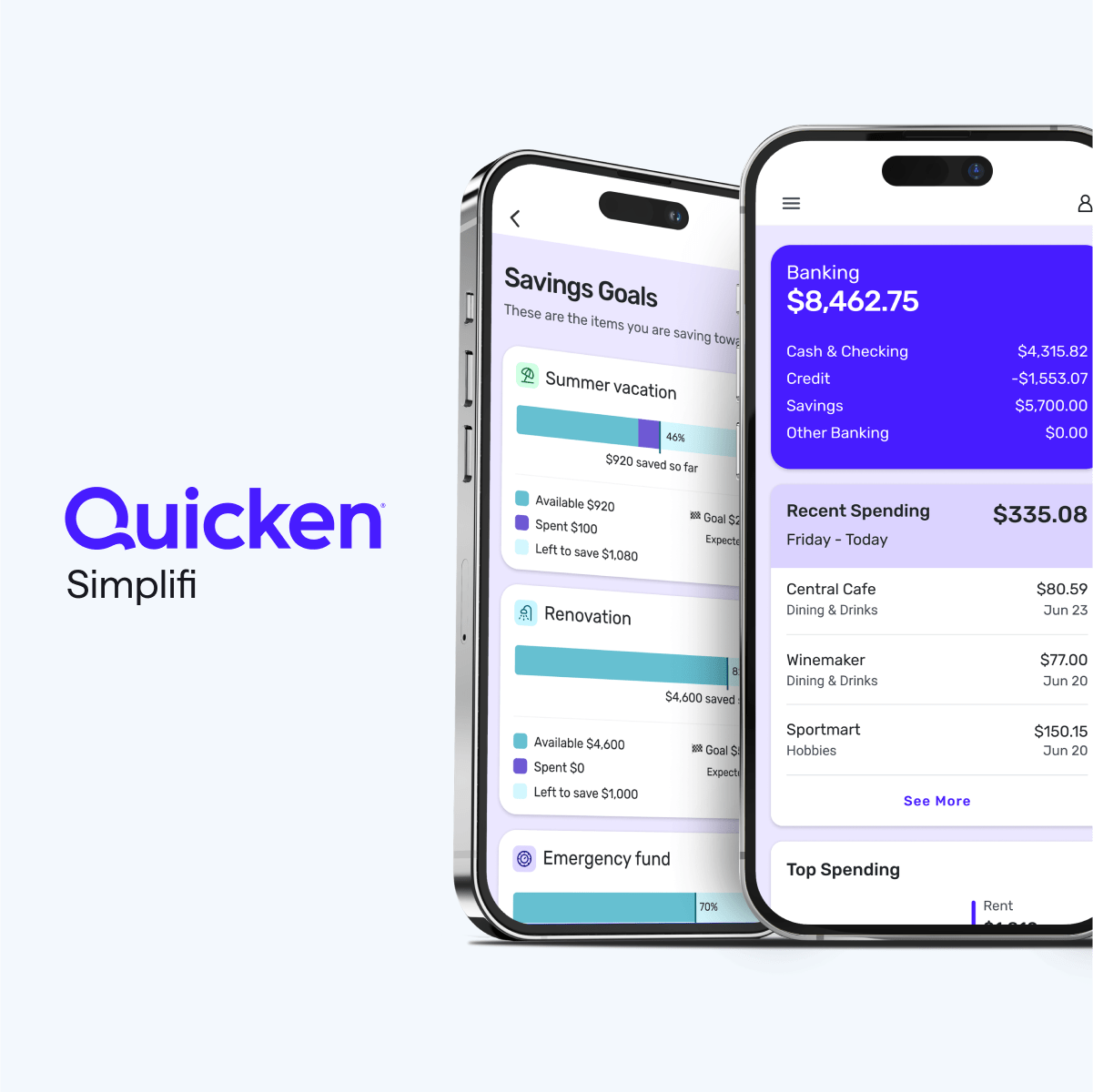
- The interface is wonderfully clean and uncluttered. Unlike classic Quicken, which can feel like a spreadsheet, Simplifi uses cards and simple lists to show you your financial picture. For example, the 'Spending Plan' shows your income minus planned bills and spending, and updates in real time as transactions come in. This makes it perfect for people who find traditional budgeting overwhelming.
- The cash flow forecast is a killer feature. It takes your upcoming bills, income, and spending habits to project your account balance day-by-day. You can see if you'll be at risk of overdrawing in two weeks or if you'll have extra cash for a splurge. This proactive insight is something few competitors offer at this price point.
- The 'Watchlist' feature lets you tag specific merchants or spending categories (like 'Starbucks' or 'Dining Out') and see how much you're spending on them each month. It's a great way to keep an eye on problematic spending without having to build a complex budget.
- Subscription monitoring is built in. Simplifi identifies recurring subscriptions (like Netflix, gym memberships, etc.) and lists them in one place. It even flags price increases or duplicate charges, which is a practical way to trim monthly expenses.
- Bank sync is generally reliable, with support for thousands of financial institutions. It also allows manual account additions, so you can track cash or accounts that don't link. The 'Pending' transaction handling is smooth, and it lets you easily split transactions (like a grocery store shopping trip that includes household items and personal items).
⚠ Watch out for
- Investment tracking is basic. You see holdings and market values, but there's no capital gains calculator, no tax-loss harvesting tool, and no in-depth performance analysis. For example, you can't see your asset allocation across accounts or drill into a specific lot's cost basis. If you're an active investor, you'll need another tool.
- No true multi-user support. The only way for couples to share is to log in with the same credentials. This is not user-friendly and can lead to sync issues if both partners are entering transactions simultaneously. You also can't set up separate roles with different permissions.
- International support is weak. The app focuses on US financial institutions and USD. If you have a foreign bank account or deal with multiple currencies, you'll be disappointed. The sync may fail, and you'll have to manually update transactions.
- The Spending Plan can be too flexible for some. Unlike envelope budgeting, it doesn't enforce hard limits. If you constantly overspend in a category, it just adjusts your plan without much friction. This is great for some, but for people who need discipline, it might not be restrictive enough.
- Customer support is average. You get email and chat support, but there's no phone line. Response times can be slow during peak seasons, and the knowledge base is thin on troubleshooting. Some users have reported that support staff lack deep technical knowledge.
🎯 Best for
Individuals or couples who want a low-effort, flexible way to track spending, monitor cash flow, and see simple investment balances without overcomplicating budgeting.
🚫 Who should skip
Investors who need portfolio-level analytics or people who prefer a hard zero-sum budgeting method like YNAB might find Simplifi too shallow.
📚 Learning curve
Minimal — most users can link accounts and set up a Spending Plan in under 30 minutes.
🧑⚖️ Verdict
Simplifi is a strong choice for budgeting beginners and those who want a simple, intuitive way to track spending and project cash flow. It's not ideal for advanced investors or couples needing true multi-user access. Bottom line: If you want a modern, flexible budgeting app with great cash flow fore
📊 Use Case Suitability
Higher score = better fit. Scores from editorial review.
🧭 Which One Should You Pick?
Choose Plum if...
- You are: UK residents who want a low-effort, automated way to save spare cash and invest small amounts without leaving a single a
- 👍 Automated AI savings that adjust to your cash flow, making it easy to save small amounts consistentl
- 👍 FCA-regulated and uses open banking, so your data and money are held under UK financial safeguards.
- 👍 A genuinely usable free tier covers core savings, bill comparisons, and some analytics.
- 💰 From $3.8/mo
- ⚠ Trade-off: UK-only: you cannot connect bank accounts outside the UK, which limits its usefu
Choose Simplifi by Quicken if...
- You are: Individuals or couples who want a low-effort, flexible way to track spending, monitor cash flow, and see simple investme
- 👍 Simple and intuitive user interface that is far less cluttered than classic Quicken, making it easy
- 👍 Spending Plan is flexible and forgiving—it doesn't lock you into strict envelope budgets; it adjusts
- 👍 Cash flow projection is a standout feature, showing your expected account balance at any future date
- 💰 From $3.99/mo
- ⚠ Trade-off: Limited investment tools—no in-depth tax planning, cost basis analysis, or advan
❓ Frequently Asked Questions
Is Plum really free to use?
Plum has a genuinely free tier that includes the core auto-saving and budgeting features. However, some advanced features like Plum Ultra, extra interest on savings, and some investment fund options require a paid subscription or separate fees.
How does Plum's bill switching feature work?
Plum compares your current utility, broadband, and insurance bills against the market and switches you to cheaper providers on your behalf. It charges a percentage of the savings it finds, but only if the switch actually reduces your annual bill.
🔗 More Budgeting Apps Comparisons
🔀 Explore Alternatives
📧 Save this comparison
We'll email you a link to this comparison. No spam.