Browse AI vs Leadfeeder
Side-by-side comparison — pricing, features, ratings, use cases. Find which Marketing fits you best.

💰 Pricing
🔧 Features
📋 Assessment
💪 Strengths
- No-code visual scraping: Browse AI's point-and-click selector is genuinely intuitive. You don't need to inspect elements or understand CSS selectors. You run a browser to the target site, click the data you want, and the platform generates a robot that can run on schedule. This is a massive time-saver for marketers and analysts who would otherwise wait for engineering resources.
- Pre-built robots for popular sites: The library includes robots for LinkedIn, Amazon, Google Maps, and more. These are not just templates; they are maintained by Browse AI to adapt to site structure changes. For example, a LinkedIn company search robot can pull employee names, titles, and URLs, which is excellent for lead gen. This saves hours of setup and is a key differentiator.
- Monitoring and alerts: You can set robots to run on a schedule (e.g., daily) and receive alerts when data changes. This is ideal for tracking competitor prices or monitoring job postings. The alerts can be sent via email or Slack, enabling near-real-time competitive intelligence without manual checking.
- Integration ecosystem: Browse AI natively integrates with Google Sheets, Zapier, and Make, plus has an API for custom workflows. That means scraped data can automatically flow into your CRM, spreadsheets, or data warehouse, eliminating manual copy-paste. For a no-code tool, the integration depth is impressive.
- Data quality features: Automatic IP rotation and proxy management help avoid blockages. The platform also handles CAPTCHAs on some sites, though not all. The deduplication feature removes duplicate records, which is critical when scraping listing pages. These features increase reliability, a common pain point in scraping tools.
⚠ Watch out for
- Pricing tiers can be limiting: The free tier offers only 50 credits per month, enough for a few small extractions. Paid plans start at $59/month, which is reasonable for businesses but may be prohibitive for hobbyists or very small startups. Additionally, credits are consumed per run and per data point, so large extractions burn through them quickly. You might find yourself upgrading sooner than expected.
- Handling JavaScript-heavy sites can be hit-or-miss: While Browse AI has a browser extension for recording clicks, some dynamic sites (e.g., infinite scroll, Angular apps) may not select elements correctly. The platform suggests using their 'browser-use' mode, but that adds a surcharge. For genuinely complex sites, you may still need to manually write XPath or use a developer.
- Anti-bot protections still block sometimes: Browse AI's IP rotation helps, but sites with aggressive bot detection (like Cloudflare or custom systems) can still block extraction. The platform warns about this, and there's no guarantee. For scraping sensitive data like social media profiles, expect occasional failures and the need for workarounds.
- No free trial for premium features: While there's a free tier, it's quite limited. To test monitoring or larger extractions, you must pay. This makes it hard to evaluate the full value proposition before committing, especially for users who only need monitoring for one or two sites.
- Customer support is not always responsive: On some forums, users have reported slow response times (up to 24 hours) from support. While there's a comprehensive knowledge base, live chat is not always available. For critical issues, the lag can be frustrating, especially for time-sensitive scraping tasks.
🎯 Best for
Marketers, analysts, and operations teams who need to quickly extract and monitor web data without coding, and who value speed and ease of use over massive scale.
🚫 Who should skip
Data teams or developers needing production-grade, high-volume scraping with custom proxy pools, CAPTCHA solving, or complex workflow automation.
📚 Learning curve
Minimal — the visual point-and-click interface is intuitive, though understanding pagination, selectors, and scheduling nuances can take a few hours.
🧑⚖️ Verdict
Browse AI is an excellent buy for marketers, analysts, and small teams who need reliable web data extraction without coding. Its visual interface and pre-built robots make it easy to start, and integrations ensure data flows into your workflow. However, if you're on a tight budget or need to scrape
💰 Pricing
🔧 Features
📋 Assessment
💪 Strengths
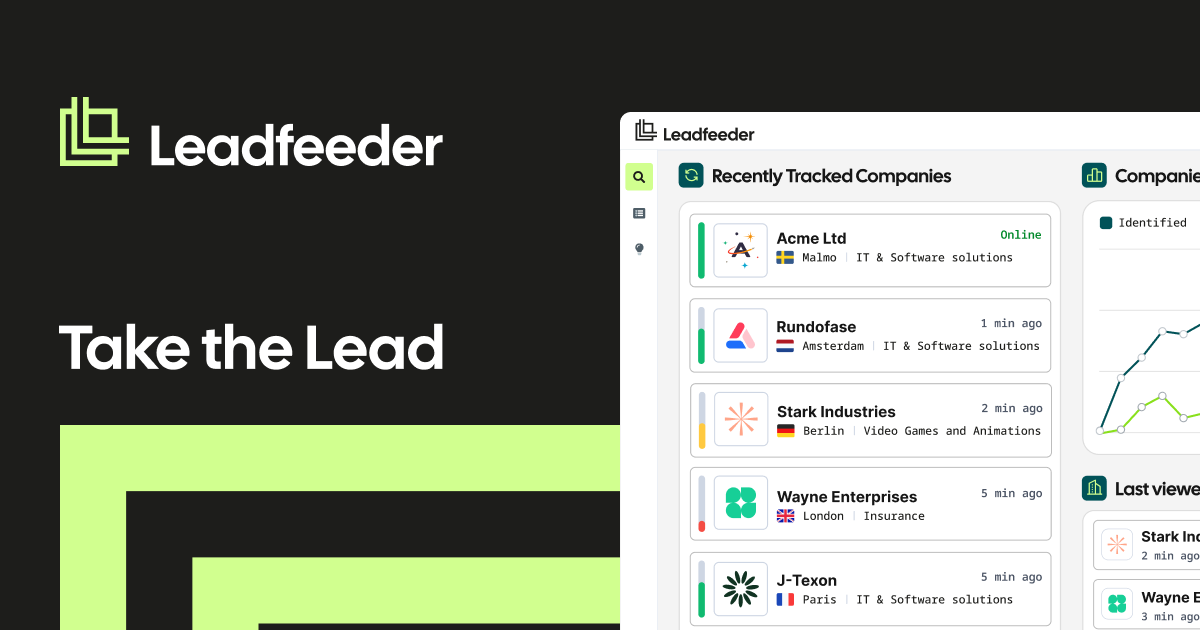
- The free plan is genuinely useful, allowing up to five users and one data source with 100 identified companies per month. This is a generous offer compared to many competitors who only provide time-limited trials. It enables SMBs to test the tool's value without upfront investment, making it a low-risk entry into visitor intelligence.
- Seamless integration with Google Analytics means no complex installation. Leadfeeder taps into your existing GA data to capably identify companies, their page views, and referral sources. This not only saves time but also provides context-rich data that helps sales reps understand which content resonates with prospects.
- CRM synchronization is a standout feature. Native integrations with HubSpot, Salesforce, and Pipedrive automatically create and update lead profiles, assign them to sales reps, and log activities. This eliminates manual data entry and ensures that sales teams are working with the most current information, directly impacting response times and productivity.
- The 'Lead Scoring' feature allows users to set custom parameters based on company demographics and visitor behavior. This is critical for prioritization, as it helps sales teams focus on high-fit, high-intent leads rather than wasting time on low-quality traffic. The feature is easy to configure and provides clear explanations for why a lead matches your criteria.
- Real-time visitor tracking provides immediate alerts when a qualified company visits your site. This enables sales teams to engage while the lead is still active, significantly increasing conversion chances. The alert system is customizable, so you can notify specific team members based on the lead's score or activity.
⚠ Watch out for
- Leadfeeder's data coverage is limited. It identifies companies based on reverse IP lookup, which may miss visitors from smaller businesses or those using shared IPs. This can result in incomplete data, particularly for companies with less stable infrastructure. The tool itself acknowledges that it cannot identify a significant portion of traffic, which may be frustrating for users expecting complete visibility.
- The pricing model can become expensive as your needs grow. The free plan is limited, but the paid plans start at a substantial monthly cost and increase significantly with higher visitor limits and premium features like sales intent data. For businesses with high traffic volume, the cost can balloon quickly, and the value-per-lead might not justify the expense compared to alternative solutions.
- Lack of advanced predictive analytics. Unlike some competitors, Leadfeeder does not offer AI-driven forecasting or predictive lead scoring based on historical patterns. It relies on preset rules and real-time data, which is fine for basic prioritization but may miss deeper insights that could improve sales strategies.
- The implementation of custom filters and segmentation can be complex for non-technical users. While the interface is generally intuitive, setting up advanced filters for multiple conditions or creating custom scoring models can be cumbersome, requiring a learning period to fully leverage the tool's capabilities.
- Customer support is limited to email and a knowledge base on the free plan, with live chat reserved for higher-tier subscribers. Response times can be slow, especially for free users, which may be a concern if you encounter issues that need immediate resolution.
🎯 Best for
B2B SMBs, sales teams, and marketing agencies that want to turn anonymous website traffic into identifiable companies and pipeline-ready leads without paying a large upfront cost.
🚫 Who should skip
Consumer-facing companies, businesses that need individual visitor identity or contact details, and teams that rely on comprehensive mobile or privacy-filtered traffic tracking.
📚 Learning curve
Minimal. If you can copy a script tag and read a basic dashboard, you'll be productive within a few hours; the only real learning curve is understanding which visitors are and aren't being captured by IP-based tracking.
🧑⚖️ Verdict
Leadfeeder is a solid entry-level visitor identification tool for SMBs and agencies that want to convert anonymous traffic into leads without the high cost of enterprise platforms. It’s best for those with Google Analytics and a CRM, and it offers a generous free plan to test its value. If you need
📊 Use Case Suitability
Higher score = better fit. Scores from editorial review.
🧭 Which One Should You Pick?
Choose Browse AI if...
- You are: Marketers, analysts, and operations teams who need to quickly extract and monitor web data without coding, and who value
- 👍 Truly no-code visual interface lets non-developers build and run scrapers quickly.
- 👍 Large library of pre-built robots for popular sites like LinkedIn, Amazon, and Google Maps, saving s
- 👍 Built-in monitoring and change alerts can notify you via email or Slack when a page updates.
- 💰 From $39/mo
- ⚠ Trade-off: Free plan is very limited, with only a small monthly credit allowance that runs
Choose Leadfeeder if...
- You are: B2B SMBs, sales teams, and marketing agencies that want to turn anonymous website traffic into identifiable companies an
- 👍 Free plan includes up to five users, making it accessible for small SMBs and agencies testing visito
- 👍 Direct Google Analytics and CRM integrations automate the flow of visitor data into sales tools with
- 👍 Visitor scoring by fit and intent helps sales reps prioritize high-value accounts instead of chasing
- 💰 From $79/mo
- ⚠ Trade-off: Identifies companies, not individuals, so you only get the account name rather t
❓ Frequently Asked Questions
Is the free plan enough for regular scraping?
The free plan is very limited and only gives you a small monthly credit allowance, which is enough for testing and occasional light usage. Regular or large-scale scraping will require a paid subscription.
What are the main limitations compared to writing my own scraper?
You have less control over anti-bot evasion, proxy management, and complex data transformations. Browse AI is also credit-based, so high-volume scraping can get expensive compared to running your own infrastructure.
🔗 More Marketing Comparisons
🔀 Explore Alternatives
📧 Save this comparison
We'll email you a link to this comparison. No spam.