Browse AI vs WhatConverts
Side-by-side comparison — pricing, features, ratings, use cases. Find which Marketing fits you best.

💰 Pricing
🔧 Features
📋 Assessment
💪 Strengths
- No-code visual scraping: Browse AI's point-and-click selector is genuinely intuitive. You don't need to inspect elements or understand CSS selectors. You run a browser to the target site, click the data you want, and the platform generates a robot that can run on schedule. This is a massive time-saver for marketers and analysts who would otherwise wait for engineering resources.
- Pre-built robots for popular sites: The library includes robots for LinkedIn, Amazon, Google Maps, and more. These are not just templates; they are maintained by Browse AI to adapt to site structure changes. For example, a LinkedIn company search robot can pull employee names, titles, and URLs, which is excellent for lead gen. This saves hours of setup and is a key differentiator.
- Monitoring and alerts: You can set robots to run on a schedule (e.g., daily) and receive alerts when data changes. This is ideal for tracking competitor prices or monitoring job postings. The alerts can be sent via email or Slack, enabling near-real-time competitive intelligence without manual checking.
- Integration ecosystem: Browse AI natively integrates with Google Sheets, Zapier, and Make, plus has an API for custom workflows. That means scraped data can automatically flow into your CRM, spreadsheets, or data warehouse, eliminating manual copy-paste. For a no-code tool, the integration depth is impressive.
- Data quality features: Automatic IP rotation and proxy management help avoid blockages. The platform also handles CAPTCHAs on some sites, though not all. The deduplication feature removes duplicate records, which is critical when scraping listing pages. These features increase reliability, a common pain point in scraping tools.
⚠ Watch out for
- Pricing tiers can be limiting: The free tier offers only 50 credits per month, enough for a few small extractions. Paid plans start at $59/month, which is reasonable for businesses but may be prohibitive for hobbyists or very small startups. Additionally, credits are consumed per run and per data point, so large extractions burn through them quickly. You might find yourself upgrading sooner than expected.
- Handling JavaScript-heavy sites can be hit-or-miss: While Browse AI has a browser extension for recording clicks, some dynamic sites (e.g., infinite scroll, Angular apps) may not select elements correctly. The platform suggests using their 'browser-use' mode, but that adds a surcharge. For genuinely complex sites, you may still need to manually write XPath or use a developer.
- Anti-bot protections still block sometimes: Browse AI's IP rotation helps, but sites with aggressive bot detection (like Cloudflare or custom systems) can still block extraction. The platform warns about this, and there's no guarantee. For scraping sensitive data like social media profiles, expect occasional failures and the need for workarounds.
- No free trial for premium features: While there's a free tier, it's quite limited. To test monitoring or larger extractions, you must pay. This makes it hard to evaluate the full value proposition before committing, especially for users who only need monitoring for one or two sites.
- Customer support is not always responsive: On some forums, users have reported slow response times (up to 24 hours) from support. While there's a comprehensive knowledge base, live chat is not always available. For critical issues, the lag can be frustrating, especially for time-sensitive scraping tasks.
🎯 Best for
Marketers, analysts, and operations teams who need to quickly extract and monitor web data without coding, and who value speed and ease of use over massive scale.
🚫 Who should skip
Data teams or developers needing production-grade, high-volume scraping with custom proxy pools, CAPTCHA solving, or complex workflow automation.
📚 Learning curve
Minimal — the visual point-and-click interface is intuitive, though understanding pagination, selectors, and scheduling nuances can take a few hours.
🧑⚖️ Verdict
Browse AI is an excellent buy for marketers, analysts, and small teams who need reliable web data extraction without coding. Its visual interface and pre-built robots make it easy to start, and integrations ensure data flows into your workflow. However, if you're on a tight budget or need to scrape
💰 Pricing
📋 Assessment
💪 Strengths
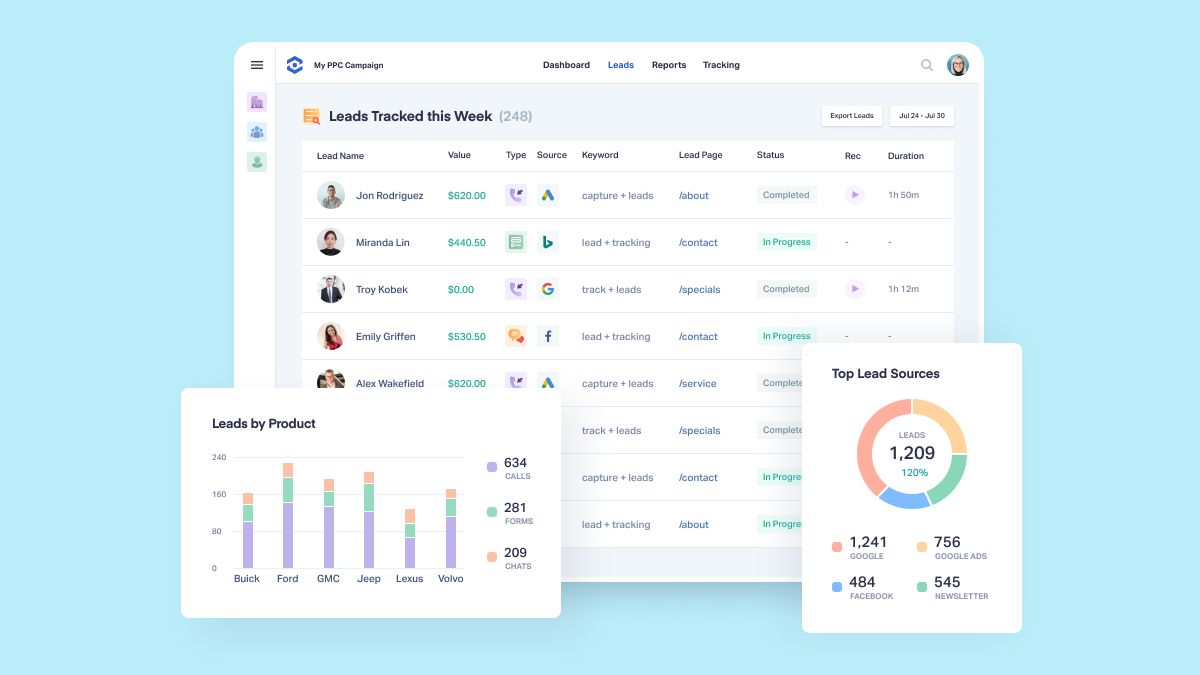
- WhatConverts shines with its unified tracking of calls, forms, chats, and clicks, all in one dashboard. This eliminates the need for multiple tools and provides a complete picture of a lead's journey, making attribution more accurate and reducing data silos. For agencies, this means no more guessing which channel actually drove the conversion.
- The platform offers excellent agency-focused features like client reports and a partner dashboard. You can efficiently manage multiple clients from one account, create custom reports that spell out marketing ROI, and control access with role-based permissions. This streamlines workflows and keeps clients informed.
- Its lead generation and management tools, including a built-in CRM and lead distribution, are surprisingly robust. Leads can be automatically routed to the right salesperson or integrated with popular CRMs like Salesforce and HubSpot. This helps turn raw leads into tangible sales opportunities, directly impacting revenue.
- The call tracking capabilities are top-notch, with dynamic number insertion, call recording, and detailed call insights. You can see exactly which keyword or ad triggered a call, hear the conversation to gauge quality, and even track outcomes like successful sales or appointments. This level of detail is invaluable for optimizing campaigns.
- The integration ecosystem is quite strong, with native integrations for major platforms like Google Ads, Facebook, and leading CRMs, as well as support for Zapier. This makes it easy to incorporate WhatConverts into existing marketing stacks without extensive custom development.
⚠ Watch out for
- The free plan is quite limited, only offering basic lead tracking for a single user. To access essential features like call tracking, form tracking with custom fields, and integrations, you must upgrade to a paid plan starting at $30/month. This may be steep for freelancers or very small businesses just starting out.
- The user interface, while functional, feels somewhat dated and can present a learning curve for first-time users. Navigating through the many settings and reports can be overwhelming, especially for those unfamiliar with lead tracking terminology. The platform could benefit from a more intuitive, modern design.
- The reporting, while comprehensive, can sometimes be overwhelming with too many metrics and options. Customizing reports to show only the most relevant data requires a bit of effort. Some users might prefer a more streamlined, pre-built reporting experience.
- WhatConverts primarily focuses on tracking leads that occur via digital interactions. It does not integrate directly with offline marketing channels like direct mail or billboards unless you manually add them. This could be a limitation for agencies managing multi-channel campaigns that include offline elements.
- While the platform offers robust integrations, the setup process can be complex, particularly for non-technical users. Implementing tracking code across multiple websites and configuring the various integration settings may require a developer or at least some technical proficiency.
🎯 Best for
Marketers, media buyers, and agencies that need undeprecated call and lead tracking to prove attribution across paid, organic, and offline campaigns.
🚫 Who should skip
Small businesses or solo marketers who only need basic analytics and don't require multi-channel attribution or agency-style reporting.
📚 Learning curve
Moderate — setting up dynamic numbers and tracking tags isn't complex, but configuring reporting and integrations takes time.
🧑⚖️ Verdict
WhatConverts is an excellent choice for marketing agencies that need comprehensive lead tracking and client reporting in one place. Its unified tracking and strong integrations make it a powerful tool for demonstrating ROI. However, smaller businesses on a tight budget may want to start with the fre
📊 Use Case Suitability
Higher score = better fit. Scores from editorial review.
🧭 Which One Should You Pick?
Choose Browse AI if...
- You are: Marketers, analysts, and operations teams who need to quickly extract and monitor web data without coding, and who value
- 👍 Truly no-code visual interface lets non-developers build and run scrapers quickly.
- 👍 Large library of pre-built robots for popular sites like LinkedIn, Amazon, and Google Maps, saving s
- 👍 Built-in monitoring and change alerts can notify you via email or Slack when a page updates.
- 💰 From $39/mo
- ⚠ Trade-off: Free plan is very limited, with only a small monthly credit allowance that runs
Choose WhatConverts if...
- You are: Marketers, media buyers, and agencies that need undeprecated call and lead tracking to prove attribution across paid, or
- 👍 Combines phone, chat, form, and click tracking in one platform, eliminating the need for multiple di
- 👍 Built specifically for agencies, with client-level dashboards, lead routing, and white-label reporti
- 👍 Dynamic number insertion provides granular attribution down to the keyword, ad, or even exact visito
- 💰 From $50/mo
- ⚠ Trade-off: The free tier is quite restricted; multi-user access, advanced reporting, and ma
❓ Frequently Asked Questions
Is the free plan enough for regular scraping?
The free plan is very limited and only gives you a small monthly credit allowance, which is enough for testing and occasional light usage. Regular or large-scale scraping will require a paid subscription.
What are the main limitations compared to writing my own scraper?
You have less control over anti-bot evasion, proxy management, and complex data transformations. Browse AI is also credit-based, so high-volume scraping can get expensive compared to running your own infrastructure.
🔗 More Marketing Comparisons
🔀 Explore Alternatives
📧 Save this comparison
We'll email you a link to this comparison. No spam.