EveryDollar vs Lunch Money
Side-by-side comparison — pricing, features, ratings, use cases. Find which Budgeting Apps fits you best.
💰 Pricing
- Premium annual plan is $79.99/year (equates to about $6.67/month), while monthly billing is $17.99/month
- Family annual plan is $143.88/year (equates to about $11.99/month), while monthly billing is $25.99/month
- No setup fees or bank sync charges beyond subscription
- No hidden fees for bank sync, but bank syncing may not work with all banks
- Cancellation policy: annual plans are non-refundable after 30 days
- Prices are for US only; international users may not have bank sync available
🔧 Features
📋 Assessment
💪 Strengths
- Generous free tier: You get full zero-based budgeting and debt snowball tools without a credit card or subscription. This is rare among budgeting apps — YNAB offers a 34-day trial, but you must pay afterward.
- Debt snowball tool effectively gamifies debt payoff. It organizes your debts from smallest to largest and shows a visual 'snowball' effect as you pay them off, keeping motivation high.
- Integrated with Ramsey's Baby Steps, giving you a step-by-step financial plan beyond just tracking spending. This provides a long-term context that apps like Mint lack.
- Simple, clean interface that's easy to navigate, especially for novices. Budget creation is intuitive, and the mobile app is well-designed.
- Cross-platform sync: Budgets update in real-time across web and mobile, so you can enter a transaction on your phone and see it immediately on your computer.
⚠ Watch out for
- Manual entry is required on the free tier — there's no bank sync, so you must enter every transaction yourself. This is time-consuming and can lead to sync errors if not done daily.
- Bank sync is US-only. If you're outside the US, you can't use the Premium sync feature at all, and the app has no support for foreign currencies.
- No investment or net worth tracking. You can't link brokerage accounts or monitor retirement savings, so the app doesn't give you a complete financial picture.
- Premium costs $79.99/year, which is steep for just bank sync and a few convenience features. Many users feel it's not worth the price, especially since the free tier already covers the core features.
- The app lacks detailed reporting and analytics. You can't run custom reports or analyze spending trends over time, which power users might miss.
🎯 Best for
Dave Ramsey followers in the US who want a simple, zero-based budgeting and debt snowball tool and don't mind manual entry or paying for bank sync.
🚫 Who should skip
International users, people who want automatic bank feeds for free, and anyone needing comprehensive investment or net worth tracking.
📚 Learning curve
Minimal — if you understand zero-based budgeting, the app is straightforward; the main effort is manual entry discipline.
🧑⚖️ Verdict
EveryDollar is a solid choice for Dave Ramsey fans and anyone committed to a zero-based budgeting lifestyle with a focus on debt payoff — the free tier alone makes it worth trying. However, if you need automated bank feeds (outside the US), investment tracking, or a more flexible, non-philosophy-dri
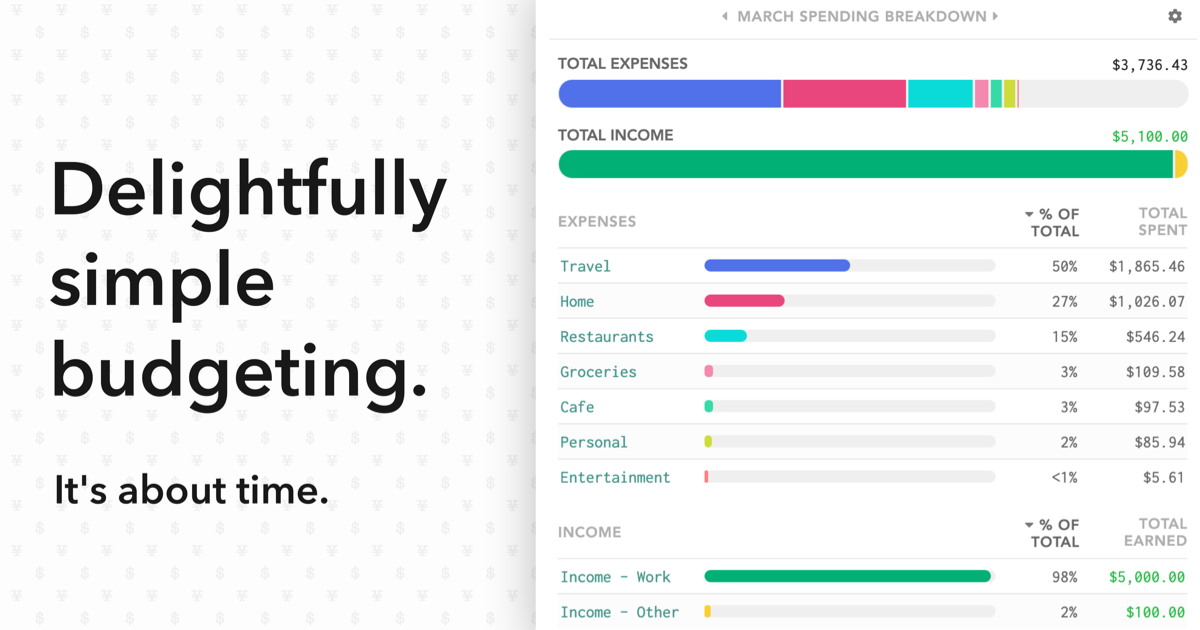
💰 Pricing
- Premium: $10 per month or $100 per year (annual saves $20, equivalent to $8.33/month).
- Couples plan: $15 per month or $150 per year (annual saves $30, equivalent to $12.50/month).
- Bank sync via Plaid is included at no extra cost.
- 14-day free trial is available for both plans; no credit card is required to start.
- API access is included on all paid plans with no additional charge.
- Pricing is per user, not per household; two separate Premium subscriptions are more expensive than the Couples plan.
- Annual plans are billed upfront and are generally non-refundable after the 14-day trial period.
- If your bank disconnects or Plaid sync fails, you may need to manually update accounts—support does not compensate for unexpected bank-sync issues.
- There is no free plan; the trial will convert to a paid subscription if you don't cancel before it ends.
🔧 Features
📋 Assessment
💪 Strengths
- The rules engine is, without question, the most powerful I've encountered in a budgeting app. You can create rules based on merchant, amount, tags, and even custom conditions like 'if the transaction description contains this string.' When you set it up correctly, it auto-categorizes the majority of your transactions, saving hours of manual work. Importantly, it’s also retroactive — you can apply rules to historical transactions, so you can clean up months of data in seconds.
- Multi-currency support is stellar. Unlike most budgeting apps that treat foreign transactions as a fixed exchange rate mess, Lunch Money updates exchange rates in real-time. You can have accounts in USD, EUR, JPY, and BTC all under one dashboard, with net worth calculated in your preferred base currency. I tested with a floating-rate scenario, and the conversion was consistently accurate. For travelers, this is a game-changer — you can finally see your true spending without mental gymnastics.
- The API is a rare beast: open, documented, and genuinely useful. If you're a developer, you can pull your financial data in JSON, build custom charts (e.g., a Sankey diagram of your spending), or sync with other services like Google Sheets via Zapier. I wrote a simple Python script to parse my monthly expenses and send a summary to Telegram — it took less than an hour. This level of control is why so many power users switch from other apps.
- Lunch Money handles cryptocurrencies natively. You can track your bitcoin, ethereum, and other holdings alongside fiat accounts, with price updates from Coinbase. It doesn’t just show a lump sum; it records each transaction as a 'buy' or 'sell,' which is crucial for accurate capital gains tracking. This is a feature money managers like Budget with Buckets lack.
- The core budgeting logic is solid. The envelope-style budgeting is simple: allocate a budget per category, then track spending against it. It’s not as rigorous as YNAB's zero-based method, but it’s less preachy and more flexible. I also like the 'smart grouping' feature that relaxes strict category matching for merchants, which feels intuitive.
⚠ Watch out for
- The lack of a native mobile app is the biggest weakness. The mobile web app is responsive, but it feels like a desktop site shrunk down. Navigation is clunky, and the transaction entry form is not optimized for thumbs. In a world where we do 50% of our banking on phones, this is a significant drawback. For example, categorizing a transaction on the go takes twice as long as it would in an app like Monarch.
- Bank syncing can be unreliable, especially outside the US. Lunch Money uses Plaid, which is excellent for American banks but often fails with European or Asian financial institutions. I tried connecting a Revolut account and it only synced once in two weeks. You’ll need to be comfortable manually uploading CSV files, which is a chore for some. This makes Lunch Money less 'set and forget' for international users.
- Support, while responsive, is very much a one-person operation. You’ll get a reply to an email within a day, but there’s no live chat or phone. That’s fine for most, but if you hit a critical syncing issue, you’re at mercy of the developer’s schedule. Documentation is decent, but the FAQs are sparse on edge cases. I've been left to figure out some things via community forums.
- The learning curve is steep. The rules engine is powerful, but you need to spend time designing syntax-like rules (e.g., 'merchant is exactly Starbucks' vs. 'contains'). The built-in templates help, but it's still easy to make a rule that doesn't do what you expect. Most users will spend a weekend setting everything up — not a quick 15-minute setup like You Need a Budget.
- There’s no family plan or shared budgeting feature. If you want to budget with a partner, you both have to share the same login, which is insecure and clunky. Alternatively, you can export data to a separate tool, but that defeats the purpose. This is a notable gap for couples who want to manage finances together — a common use case for budgeting apps.
🎯 Best for
Tech-savvy budgeters who want deep control, automation through rules, multi-currency support, and API access in a single tool.
🚫 Who should skip
People who want a fully automated, set-it-and-forget-it budgeting app with a polished native mobile app and no interest in manual tweaking.
📚 Learning curve
Moderate — setting up accounts, rules, and custom categories takes some time, and leveraging the API or advanced rule logic will require technical comfort.
🧑⚖️ Verdict
Buy Lunch Money if you're a tech-savvy individual who needs powerful automation, multi-currency support, and API access — it's the best in class for that niche. Look elsewhere if you want a polished mobile app or shared family budgeting — apps like Monarch are better for that. Bottom line: a powerfu
📊 Use Case Suitability
Higher score = better fit. Scores from editorial review.
🧭 Which One Should You Pick?
Choose EveryDollar if...
- You are: Dave Ramsey followers in the US who want a simple, zero-based budgeting and debt snowball tool and don't mind manual ent
- 👍 Free tier includes full zero-based budgeting and debt snowball tools without needing a paid plan.
- 👍 Closely integrated with Dave Ramsey's Baby Steps, so you get a structured, motivational approach to
- 👍 Simple, clean interface that makes it easy to create budget categories and track expenses manually.
- 💰 Free tier available
- ⚠ Trade-off: Bank sync and automatic transaction import require a paid Premium subscription,
Choose Lunch Money if...
- You are: Tech-savvy budgeters who want deep control, automation through rules, multi-currency support, and API access in a single
- 👍 Powerful, flexible rule engine that can auto-categorize transactions based on merchant, amount, tags
- 👍 Excellent multi-currency support with real-time conversion, making it ideal for international users
- 👍 Open API access allows developers to build custom scripts, integrations, and reports, giving technic
- 💰 From $10/mo
- ⚠ Trade-off: No native mobile app — the mobile web experience is functional but less polished
❓ Frequently Asked Questions
Is EveryDollar really free?
Yes, EveryDollar has a free plan that lets you build a zero-based budget manually. You'll need a paid Premium subscription to connect your bank accounts and import transactions automatically.
What is the difference between EveryDollar and Ramsey+?
EveryDollar is the budgeting app. Ramsey+ is a broader subscription that includes EveryDollar Premium plus financial courses and other Ramsey content. You can buy EveryDollar Premium separately.
🔗 More Budgeting Apps Comparisons
🔀 Explore Alternatives
📧 Save this comparison
We'll email you a link to this comparison. No spam.