GitHub Copilot vs GitHub Spark
Side-by-side comparison — pricing, features, ratings, use cases. Find which AI Coding Tools fits you best.
💰 Pricing
🔧 Features
📋 Assessment
💪 Strengths
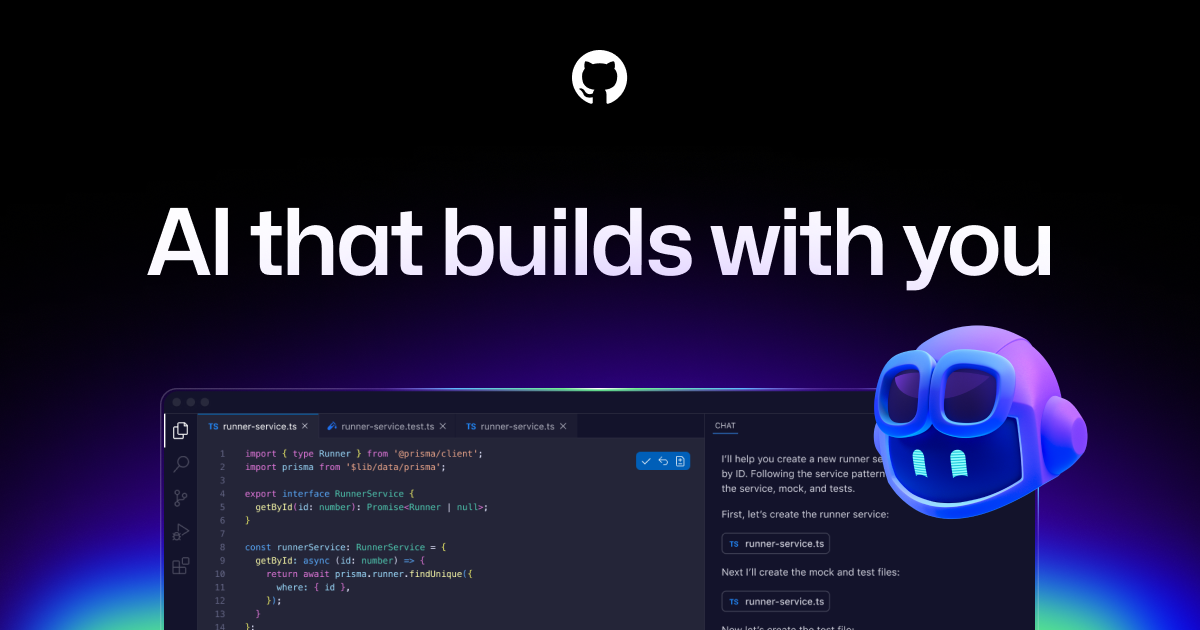
- Copilot's real-time, context-aware suggestions are impressively accurate for common patterns and boilerplate. It analyzes surrounding code, comments, and even the repository's language statistics to propose entire functions or classes. This dramatically reduces typing and helps you maintain momentum when you're in a flow state. For example, when writing a new Express route, Copilot will often suggest the entire handler without prompting.
- It supports dozens of languages, from Python, JavaScript, and TypeScript to Go, Ruby, Rust, and even SQL. Integration goes beyond VS Code: it works in JetBrains, Neovim, and Visual Studio. This breadth makes it a versatile pick for polyglot developers who don't want to switch tools when changing projects.
- The free tier is a generous entry point. While limited to 2,000 suggestions per month (and only 50 chat requests), it's enough to evaluate the tool's value, especially for students or hobbyists. You can test it on a small side project before committing to the paid plan.
- Copilot's chat panel, added in 2023, answers natural-language questions about your code, explains selected snippets, and can suggest fixes for errors. It's a valuable learning aid for junior developers and a time-saver for scanning unfamiliar codebases.
- The accuracy for common frameworks (e.g., React, Django) is high, and Copilot often anticipates multi-line changes across functions, not just single-line suggestions. This reduces the number of you're typing complete block of code that still needs tweaking.
⚠ Watch out for
- The free tier's limit of 2,000 suggestions per month is restrictive for daily use. Heavy developers can hit that in a few days, forcing them to either interrupt their workflow or pay $10/month. That's reasonable for a pro tool, but the limitation is a stark contrast to some rivals that offer free unlimited use (though with fewer features).
- Security and correctness remain major concerns. Copilot has been shown to generate code with SQL injection vulnerabilities, insecure deserialization, or logic errors. GitHub's own research found that in security-relevant tasks, about 33% of suggestions were insecure. You absolutely must review AI output, which can offset some time savings.
- There is no built-in refactoring, test generation, or documentation generation, which some competing tools (e.g., CodiumAI, Tabnine with higher tiers) offer. You'll still need separate tools or plugins for those tasks.
- Copilot requires an internet connection for most features (though there is an offline mode for some completions), and it may send code snippets to GitHub servers for processing. This is a privacy dealbreaker for developers working with proprietary code and strict data policies.
- The learning curve is not nil: while autocompletion is passive, effective use requires learning to phrase comments and prompts to get good suggestions. Some developers find that rewriting prompts takes time, and the suggestions can be unpredictable, sometimes offering irrelevant code.
🎯 Best for
Individual developers or small teams who want to speed up everyday coding tasks and reduce keystrokes without switching context.
🚫 Who should skip
Professional developers who need comprehensive AI-assisted refactoring, automated testing, or secure code generation with enterprise compliance requirements.
📚 Learning curve
Minimal — it works like an autocomplete plugin; developers familiar with IDEs can start using it immediately with no training.
🧑⚖️ Verdict
GitHub Copilot is a solid, low-cost AI assistant that boosts productivity for solo developers and teams already using GitHub. But it's not the best fit if you need strict data privacy or rely on free unlimited usage. Shop around if you need advanced features like automatic test generation; otherwise
💰 Pricing
🔧 Features
📋 Assessment
💪 Strengths
- Open Source and Free: GitHub Spark is completely free and open source, with no licensing restrictions. This is a significant advantage for developers who value transparency and the ability to audit or modify the code. You can review the implementation, suggest improvements, or even fork it for your own projects, which is a stark contrast to commercial AI coding tools that often have opaque algorithms and vendor lock-in.
- GPT-4 Powered Accuracy: The tool uses OpenAI's GPT-4, which is currently one of the most capable language models for understanding natural language and generating shell commands. This translates into more accurate and contextually relevant suggestions compared to tools that rely on smaller or older models. For instance, it can correctly interpret a complex pipeline involving grep, awk, and sed, reducing the time spent on trial and error.
- Local Context Awareness: Spark leverages local terminal context—such as current directory, command history, and environment variables—to provide suggestions that are relevant to your immediate workflow. This is a differentiator: many AI tools require you to manually paste context, but Spark automatically infers it. For example, if you're in a Git repository, it might suggest git status or git diff based on recent activity, saving you from typing these commands manually.
- Command-Line Native: It works entirely from the terminal, without needing an IDE or GUI. This is ideal for developers who prefer a minimal, keyboard-driven workflow or work on remote servers via SSH. There's no context switching, and it integrates seamlessly with tools like tmux or screen. You can invoke Spark with a simple alias or shortcut, making it a natural extension of your shell.
⚠ Watch out for
- Requires OpenAI API Key: You must provide your own OpenAI API key, which brings usage costs. While there's a small free tier, heavy usage can get expensive. This is a hidden cost for a 'free' tool, and it might be a barrier for users who don't want to pay for API access or who are concerned about privacy (since commands are sent to OpenAI). Additionally, you need to manage your API key securely, which is an extra responsibility.
- Experimental and Unstable: As a GitHub Next project, Spark is experimental. That means it may have bugs, incomplete features, and no official support. You might encounter crashes, error messages, or unexpected behavior. There's no roadmap or guarantee of future updates. For production use, this reliability is a concern. Developers relying on it for critical tasks could find themselves stuck when an edge case triggers a bug.
- Limited Scope: Spark is strictly for shell-related tasks. It cannot generate code, refactor code, or integrate with an IDE. If you need an AI assistant that can write functions, explain code snippets, or offer refactoring suggestions, this tool is not for you. Many developers expect a modern AI coding assistant to handle a broader range of tasks, and Spark's narrow focus might feel limiting.
- Privacy Concerns: Since Spark sends your terminal context and commands to OpenAI's API, there are inherent privacy implications. If you're working in a sensitive environment, sending data to a third-party service may be unacceptable. Even though OpenAI has privacy policies, the idea of transmitting command history and directory structures might give some developers pause. There's no option to run the model locally, which would mitigate these concerns.
🎯 Best for
Developers and sysadmins who live in the terminal and want an AI assistant to quickly generate commands, explain errors, and suggest next steps without leaving their CLI.
🚫 Who should skip
Users who need AI assistance inside an IDE, want full code generation or refactoring, or require team-oriented features like shared prompts or history.
📚 Learning curve
Minimal – installation is simple and interacting via natural language is intuitive, but users must be comfortable with the command line.
🧑⚖️ Verdict
GitHub Spark is a niche tool that excels at shell command generation and error explanation, but it's not for everyone. If you are a developer who lives in the terminal, value open source, and are comfortable with API costs, it's a worthwhile addition to your workflow. If you need a comprehensive AI
📊 Use Case Suitability
Higher score = better fit. Scores from editorial review.
🧭 Which One Should You Pick?
Choose GitHub Copilot if...
- You are: Individual developers or small teams who want to speed up everyday coding tasks and reduce keystrokes without switching
- 👍 Real-time, context-aware code completion directly in the editor, reducing boilerplate and typos.
- 👍 Supports dozens of languages and integrates with major IDEs like VS Code and JetBrains.
- 👍 Free tier available with limited suggestions, making it accessible for personal projects.
- 💰 From $10/mo
- ⚠ Trade-off: Free tier has a monthly suggestion limit; unlimited usage requires a paid Pro su
Choose GitHub Spark if...
- You are: Developers and sysadmins who live in the terminal and want an AI assistant to quickly generate commands, explain errors,
- 👍 Completely free and open source with no licensing restrictions.
- 👍 Uses GPT-4 to generate accurate shell commands based on local terminal context.
- 👍 Works entirely from the command line without requiring an IDE or GUI.
- 💰 Free tier available
- ⚠ Trade-off: Requires an OpenAI API key for GPT-4, which has usage costs beyond a small free
❓ Frequently Asked Questions
Is GitHub Copilot free to use?
Yes, there is a free tier that offers limited code suggestions per month. The Pro plan costs $10/month for unlimited suggestions, and the Business plan is $19/user/month with team management features.
What is the main difference between GitHub Copilot and ChatGPT for coding?
Copilot is integrated directly into your IDE for real-time, context-aware code completion, while ChatGPT is a general-purpose chatbot that requires manual code pasting. Copilot is faster for inline code suggestions.
🔗 More AI Coding Tools Comparisons
🔀 Explore Alternatives
📧 Save this comparison
We'll email you a link to this comparison. No spam.