AI Voice Cloning - AnyVoice vs DJ.Studio
Side-by-side comparison — pricing, features, ratings, use cases. Find which Ai Music fits you best.
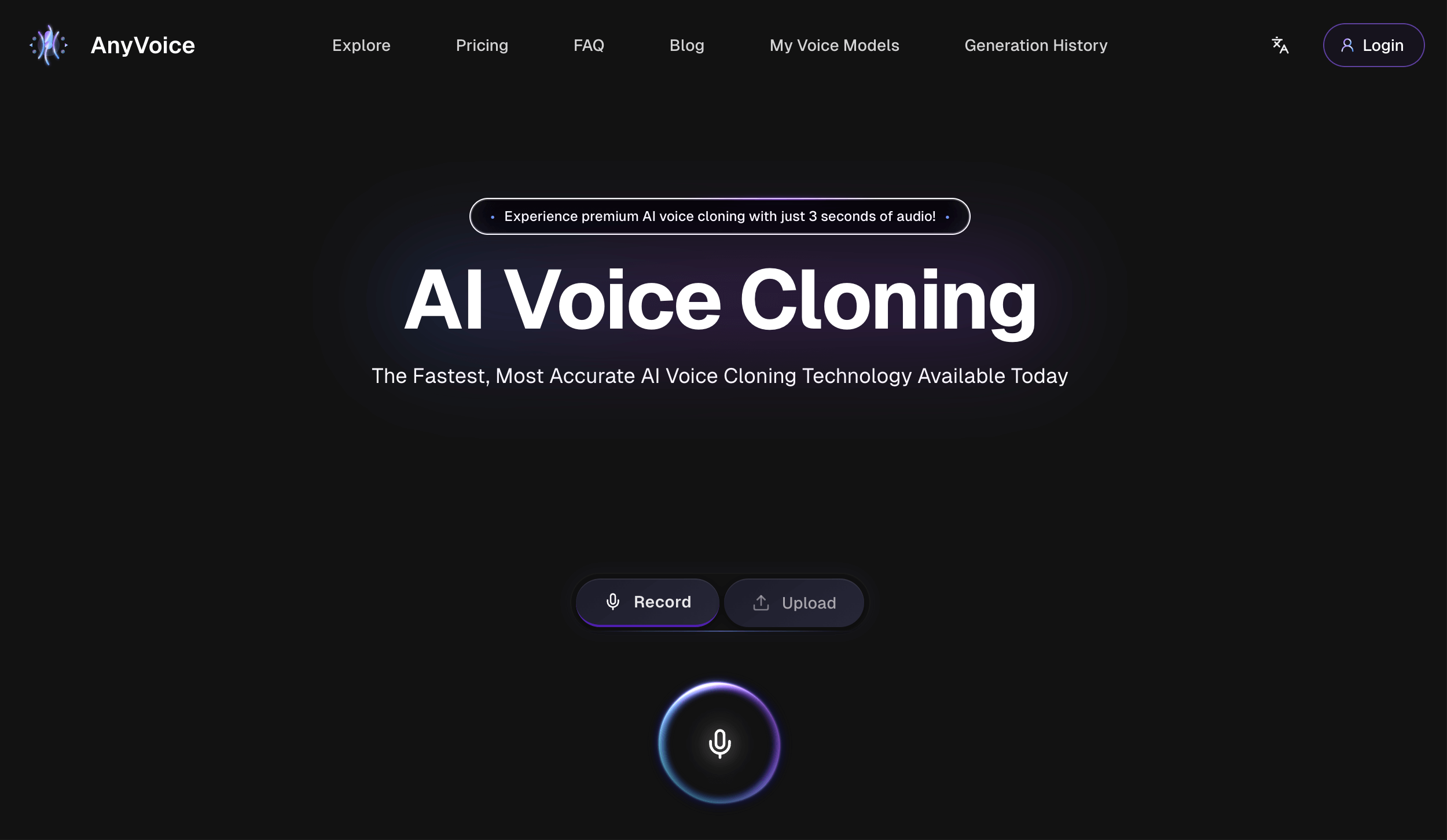
💰 Pricing
🔧 Features
📋 Assessment
💪 Strengths
- AnyVoice excels at voice cloning with minimal input. Users can create a convincing clone from just a few minutes of clean audio, which is faster and less resource-intensive than many competitors that require longer recordings. This makes it ideal for quick turnarounds on projects like YouTube voiceovers or podcast intros.
- The platform supports multiple languages, enabling creators to generate voice content for global audiences without needing a native speaker. This is particularly useful for e-learning modules, multilingual audiobooks, and localized marketing materials. The quality of non-English voices is generally good, though not flawless.
- API access on the Enterprise plan allows developers to embed voice synthesis into their own applications, such as chatbots or voice assistants. This is a critical feature for tech teams looking to automate voice responses in customer service or interactive experiences.
- AnyVoice offers granular voice editing tools, letting users fine-tune pitch, speed, and emphasis on specific words or phrases. This level of control helps achieve a more natural delivery, which is often the difference between a synthetic-sounding voice and one that feels human.
- The pricing is competitive, with plans starting at $29/month, and there's a free tier to test the waters (though limited). For sole creators or small businesses, this is an affordable entry point into AI voice generation.
⚠ Watch out for
- The free tier is extremely restrictive: users get a few samples, output is watermarked, and commercial use is prohibited. This makes it nearly useless for anyone needing professional, unmarked audio. Most users will need to upgrade immediately, which is disappointing.
- No collaboration features. There's no way to share workspaces or invite team members to work on the same project. This is a major drawback for agencies or in-house content teams that need to collaborate on voiceovers. Competitors like Descript offer collaborative timelines.
- Lacks GDPR and SOC2 compliance, which is alarming for businesses subject to data protection regulations. This means using AnyVoice for anything involving personal data, such as customer-facing voice assistants, could put companies at legal risk. Enterprises should verify if AnyVoice can meet their compliance standards before purchasing.
- The voice quality, while realistic, sometimes struggles with emotional nuance and complex sentences. It can sound flat in long narrations, and accents or unusual pronunciations may be handled poorly. Some competitors offer more expressive voices.
- Customer support is limited to email, with no live chat or phone support on lower tiers. Response times can be slow, which is frustrating when issues arise during time-sensitive projects. There is a knowledge base, but it's sparse.
🎯 Best for
Individual content creators, developers, and small businesses needing straightforward voice cloning for personal projects or commercial use without complex collaboration requirements.
🚫 Who should skip
Enterprise teams requiring compliance certifications (GDPR/SOC2), built-in collaboration, or extensive integrations with existing tools like video editors or CMS platforms.
📚 Learning curve
Minimal – the interface is intuitive, and basic cloning can be done in a few clicks. Advanced features like voice editing or API integration require some learning but are well-documented.
🧑⚖️ Verdict
AnyVoice AI Voice Cloning is a solid choice for solo content creators and developers who need quick, multilingual voice synthesis without a steep learning curve. However, if you require team collaboration or enterprise-grade compliance (GDPR/SOC2), look elsewhere. Bottom line: a capable tool for ind
💰 Pricing
🔧 Features
📋 Assessment
💪 Strengths
- Web-based accessibility is a major plus. Because DJ.Studio runs entirely in your browser, there's no installation, no hardware dependencies, and no need for a high-spec computer. You can access your projects from any desktop browser, making it incredibly convenient for users who switch between home and work computers. All processing is done in the cloud, ensuring consistent performance across devices.
- The drag-and-drop interface is exceptionally user-friendly. The timeline layout closely resembles video editing software, letting you visually arrange tracks, adjust transitions, and apply effects with simple mouse gestures. This lowers the barrier for beginners who might otherwise be intimidated by complex DJ controllers or DAWs. You can quickly import audio files, drag them onto tracks, and use the built-in beat alignment to sync them automatically, saving hours of manual editing.
- The affordable pricing model is a standout feature. The Pro tier at $10/month offers unlimited exports, which is great for users who are just starting out or producing content on a regular basis. Compared to other DJ software that might require a high upfront cost (e.g., Ableton Live) or more expensive subscriptions (e.g., Serato DJ Pro with hardware), DJ.Studio is very kind to your wallet. There's also a free trial that allows you to test the waters without committing.
- Built-in loops and effects expand creative possibilities. DJ.Studio comes with a library of royalty-free loops and samples, which you can use to add texture to your mixes. Effects like filters, echoes, and reverb can be applied in real-time, giving your mixes a professional polish. This is especially useful for creating unique transitions or building energy in a mix without needing external plugins.
- The export options are tailored for different platforms. Whether you're creating a mix for SoundCloud, Mixcloud, or a podcast, DJ.Studio allows you to export audio in common formats like MP3 and WAV. This ensures compatibility with major distribution channels, simplifying the workflow from creation to publishing.
⚠ Watch out for
- Lack of AI-powered features is a significant drawback. Unlike some competitors that offer AI-assisted beatmatching, key detection, or track recommendations based on harmonic mixing, DJ.Studio requires you to manually plan your track order and transitions. While it has automatic beat alignment, it falls short in analyzing musical key and energy levels, which can result in jarring key clashes if you're not careful. For users who rely on AI to guide them, this might be a deal-breaker.
- No mobile app or offline mode limits flexibility. Since DJ.Studio is web-based, you cannot use it on a smartphone or tablet, and you must have a stable internet connection to access your projects. This is a major inconvenience for DJs who travel or perform in venues where Wi-Fi is unreliable. Desktop-only and always-online also means you can't work on your mix during a long flight or in a coffee shop with weak signal.
- There is no real-time collaboration or shared project feature. If you're working with a group — say, a band, a podcast team, or a music production trio — you cannot invite members to edit the same project simultaneously. Collaborators would have to download and re-upload files, which is cumbersome and can lead to version control issues. This makes DJ.Studio unsuitable for team workflows.
- The free tier is quite limited. While there is a free trial, it likely restricts the number of exports, storage, and maybe the length of mixes. For budget-conscious users, the $10/month Pro is the entry point for unlimited use, which may still be a barrier for hobbyists who want to test it for an extended period.
- The learning curve for advanced features might be steeper than expected. Despite its intuitive drag-and-drop interface, mastering the timeline, understanding effect automation, and creating smooth transitions requires practice. The software doesn't provide extensive built-in tutorials or tooltips that guide you through advanced functionalities, so you may need to rely on external YouTube videos or forums.
🎯 Best for
Hobbyist DJs and content creators who want a simple, affordable way to create polished mixes without investing in studio software or hardware.
🚫 Who should skip
Professional DJs needing real-time performance capabilities, advanced production tools, or collaborative features should skip DJ.Studio.
📚 Learning curve
Minimal - the interface is intuitive with clear tooltips and a non-destructive workflow, though advanced mixing techniques may take a few hours to master.
🧑⚖️ Verdict
DJ.Studio is an excellent choice for hobbyists, podcasters, and content creators who want an easy, affordable way to create polished mixes without technical hurdles. However, if you need AI-driven features, mobile support, or team collaboration, you should look elsewhere. Bottom line: it's a great v
📊 Use Case Suitability
Higher score = better fit. Scores from editorial review.
🧭 Which One Should You Pick?
Choose AI Voice Cloning - AnyVoice if...
- You are: Individual content creators, developers, and small businesses needing straightforward voice cloning for personal project
- 👍 Realistic voice cloning with minimal sample requirements (a few minutes of clean audio).
- 👍 Supports multiple languages, enabling cross-border content creation.
- 👍 Offers API access on the Enterprise plan for developers to integrate voice synthesis into apps.
- 💰 From $29/mo
- ⚠ Trade-off: Free tier is heavily limited (few samples, likely watermarked, no commercial use
Choose DJ.Studio if...
- You are: Hobbyist DJs and content creators who want a simple, affordable way to create polished mixes without investing in studio
- 👍 Web-based platform means no installation or hardware requirements, accessible from any browser
- 👍 Affordable Pro tier at $10/month with unlimited exports, suitable for budget-conscious users
- 👍 User-friendly interface with drag-and-drop loops and effects, lowering the barrier for beginners
- 💰 From $10/mo
- ⚠ Trade-off: Lacks AI-powered features like automatic beatmatching or track recommendations,
❓ Frequently Asked Questions
How does the voice cloning process work?
You provide a sample of the target voice (typically a few minutes of clean audio). The AI model analyzes the speech patterns, tone, and cadence, then generates a synthetic voice that can read any text input. The process is quick and requires no technical expertise.
What are the limitations of the free tier?
The free tier includes basic cloning but with limited samples (likely a cap on minutes or number of voices). It may also add watermarks or restrict commercial use. For unlimited cloning and commercial rights, you need the Pro plan at $29/month.
Can I use cloned voices for commercial projects?
Yes, but only if you subscribe to the Pro plan ($29/month) or higher. The free tier does not grant commercial rights. The Enterprise plan ($99/month) adds API access and custom voices for larger-scale commercial use.
Which languages does AnyVoice support?
The tool supports multiple languages, though the exact list isn't specified. Based on its description and general voice cloning capabilities, common languages like English, Spanish, French, German, Chinese, and others are likely available. You should check the website for the full language roster.
🔗 More Ai Music Comparisons
🔀 Explore Alternatives
📧 Save this comparison
We'll email you a link to this comparison. No spam.