Bubble vs GitHub Copilot
Side-by-side comparison — pricing, features, ratings, use cases. Find which Ai Coding fits you best.

💰 Pricing
🔧 Features
📋 Assessment
💪 Strengths
- The visual workflow editor is a standout. It allows users to drag and drop UI elements and connect them to AI actions without writing any code. For instance, creating a chatbot is as simple as adding a text input and a 'Call AI' action, then connecting it to an OpenAI model. This significantly lowers the barrier for non-technical founders to build AI-powered features that would otherwise require API knowledge.
- The AI Copilot is genuinely transformative for no-code development. It lets you describe what you want in plain English—like 'create a form to collect emails and store them in a database'—and generates the corresponding workflow and elements automatically. This accelerates the building process substantially, making it a powerful tool for prototyping and iterating on ideas quickly.
- The generous free tier is a big advantage. You can start building and testing AI features without paying anything, which is unheard of in many AI development platforms. This allows learners and hobbyists to experiment and validate ideas before committing to a paid plan, reducing initial risk.
- The integration with popular AI models is seamless. Bubble provides pre-built plugins for OpenAI, Anthropic, and others, so you can easily incorporate GPT, Claude, and image generation into your apps. This flexibility lets you choose the best model for your use case, such as GPT-4 for complex conversations or DALL-E for image creation.
- Embedding analytics and data visualization is straightforward, and with AI, you can add features like automatic data summarization. For example, you can build a dashboard that connects to a database and uses AI to generate insights in plain English, making data analysis accessible to non-technical users.
⚠ Watch out for
- Vendor lock-in is a significant concern. Once you build your app on Bubble, you're tied to their cloud infrastructure. There's no way to export your code or migrate to another platform without rebuilding from scratch. This is a major risk for businesses that may need to scale or move to a custom solution later, as it can lead to substantial rework costs.
- Performance can be a bottleneck under heavy load. Bubble's cloud environment is not designed for high-concurrency, data-intensive applications. If your AI app experiences a spike in users, you might encounter slower response times or throttling. This is a critical limitation for production-scale deployments, as it can harm user experience and deter growth.
- The no-code approach limits advanced customization. While the visual builder is powerful, it's constrained by Bubble's pre-built components and logic. If you need to implement complex business logic or leverage cutting-edge AI models with custom parameters, you'll hit walls. There's no direct code generation, so you can't tweak the underlying code to overcome these constraints.
- Support is a mixed bag. While there's a robust knowledge base and community forums, direct support (email/chat) is only available on higher plans. On the free tier or Basic plan, you may have to rely on community help, which can be slow or inconsistent. For a platform where you're building business-critical apps, this can be frustrating.
- The learning curve is steeper than expected for a no-code tool. Despite the AI Copilot, understanding Bubble's data model, workflows, and plugin ecosystem takes time. New users often find themselves watching tutorials and reading documentation for weeks before becoming proficient, which contradicts the 'instant' no-code promise.
🎯 Best for
Non-technical entrepreneurs and small businesses who want to quickly launch AI prototypes or simple production apps without hiring developers.
🚫 Who should skip
Professional developers or teams needing full control over code, high scalability, or custom AI model training – those are better off with traditional development or platforms like LangChain.
📚 Learning curve
Moderate – building basic apps is intuitive, but mastering complex workflows and performance optimization requires dedicated study.
🧑⚖️ Verdict
Bubble AI is a strong choice for non-technical founders and small teams who want to prototype and launch AI-powered applications quickly without coding. Its visual builder and AI Copilot make it accessible, and the free tier lowers entry barriers. However, businesses expecting high scalability, cust
💰 Pricing
🔧 Features
📋 Assessment
💪 Strengths
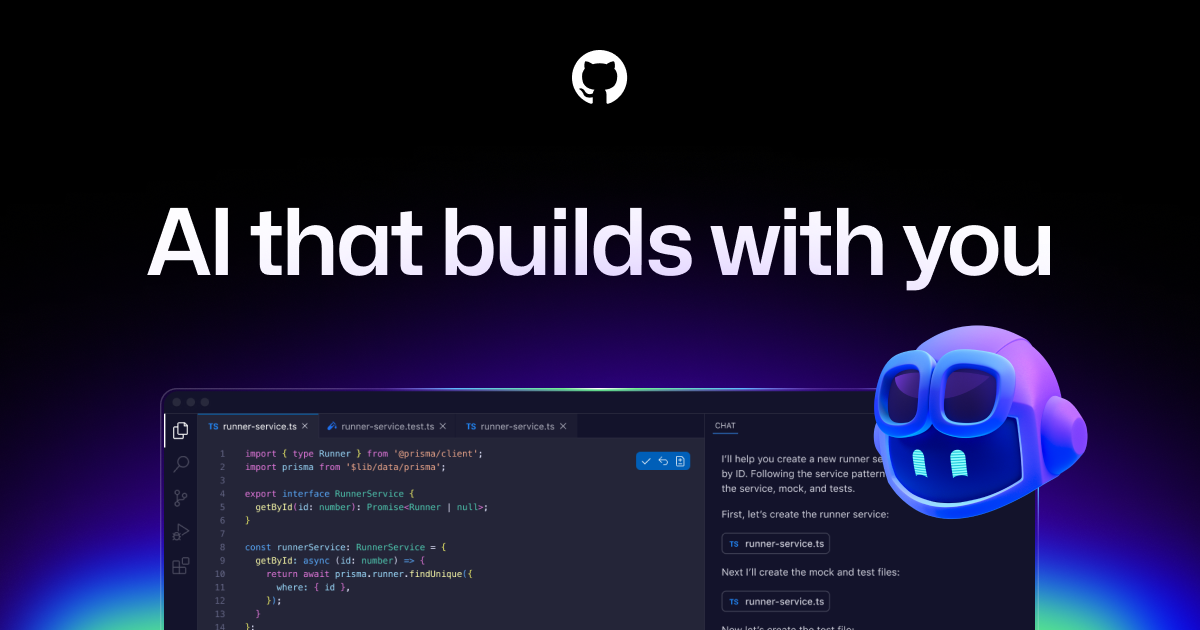
- Copilot's real-time, context-aware suggestions are impressively accurate for common patterns and boilerplate. It analyzes surrounding code, comments, and even the repository's language statistics to propose entire functions or classes. This dramatically reduces typing and helps you maintain momentum when you're in a flow state. For example, when writing a new Express route, Copilot will often suggest the entire handler without prompting.
- It supports dozens of languages, from Python, JavaScript, and TypeScript to Go, Ruby, Rust, and even SQL. Integration goes beyond VS Code: it works in JetBrains, Neovim, and Visual Studio. This breadth makes it a versatile pick for polyglot developers who don't want to switch tools when changing projects.
- The free tier is a generous entry point. While limited to 2,000 suggestions per month (and only 50 chat requests), it's enough to evaluate the tool's value, especially for students or hobbyists. You can test it on a small side project before committing to the paid plan.
- Copilot's chat panel, added in 2023, answers natural-language questions about your code, explains selected snippets, and can suggest fixes for errors. It's a valuable learning aid for junior developers and a time-saver for scanning unfamiliar codebases.
- The accuracy for common frameworks (e.g., React, Django) is high, and Copilot often anticipates multi-line changes across functions, not just single-line suggestions. This reduces the number of you're typing complete block of code that still needs tweaking.
⚠ Watch out for
- The free tier's limit of 2,000 suggestions per month is restrictive for daily use. Heavy developers can hit that in a few days, forcing them to either interrupt their workflow or pay $10/month. That's reasonable for a pro tool, but the limitation is a stark contrast to some rivals that offer free unlimited use (though with fewer features).
- Security and correctness remain major concerns. Copilot has been shown to generate code with SQL injection vulnerabilities, insecure deserialization, or logic errors. GitHub's own research found that in security-relevant tasks, about 33% of suggestions were insecure. You absolutely must review AI output, which can offset some time savings.
- There is no built-in refactoring, test generation, or documentation generation, which some competing tools (e.g., CodiumAI, Tabnine with higher tiers) offer. You'll still need separate tools or plugins for those tasks.
- Copilot requires an internet connection for most features (though there is an offline mode for some completions), and it may send code snippets to GitHub servers for processing. This is a privacy dealbreaker for developers working with proprietary code and strict data policies.
- The learning curve is not nil: while autocompletion is passive, effective use requires learning to phrase comments and prompts to get good suggestions. Some developers find that rewriting prompts takes time, and the suggestions can be unpredictable, sometimes offering irrelevant code.
🎯 Best for
Individual developers or small teams who want to speed up everyday coding tasks and reduce keystrokes without switching context.
🚫 Who should skip
Professional developers who need comprehensive AI-assisted refactoring, automated testing, or secure code generation with enterprise compliance requirements.
📚 Learning curve
Minimal — it works like an autocomplete plugin; developers familiar with IDEs can start using it immediately with no training.
🧑⚖️ Verdict
GitHub Copilot is a solid, low-cost AI assistant that boosts productivity for solo developers and teams already using GitHub. But it's not the best fit if you need strict data privacy or rely on free unlimited usage. Shop around if you need advanced features like automatic test generation; otherwise
📊 Use Case Suitability
Higher score = better fit. Scores from editorial review.
🧭 Which One Should You Pick?
Choose Bubble if...
- You are: Non-technical entrepreneurs and small businesses who want to quickly launch AI prototypes or simple production apps with
- 👍 No-code approach allows non-technical founders to rapidly prototype and launch AI-powered apps.
- 👍 Generous free tier for learning and building small apps without upfront investment.
- 👍 Built-in team collaboration on higher plans, enabling multiple contributors to work simultaneously.
- 💰 From $25/mo
- ⚠ Trade-off: Limited scalability: apps must run on Bubble’s cloud, which may throttle under h
Choose GitHub Copilot if...
- You are: Individual developers or small teams who want to speed up everyday coding tasks and reduce keystrokes without switching
- 👍 Real-time, context-aware code completion directly in the editor, reducing boilerplate and typos.
- 👍 Supports dozens of languages and integrates with major IDEs like VS Code and JetBrains.
- 👍 Free tier available with limited suggestions, making it accessible for personal projects.
- 💰 From $10/mo
- ⚠ Trade-off: Free tier has a monthly suggestion limit; unlimited usage requires a paid Pro su
❓ Frequently Asked Questions
Can I connect external AI models like GPT-4 or custom APIs?
Yes, Bubble supports integration with various AI models and external APIs through its API connector plugin, allowing you to bring in models like GPT-4, Claude, or custom endpoints.
Is Bubble truly free to start building AI apps?
Bubble offers a free tier that lets you build and test apps, but with limited capacity (e.g., 30 app builds per month). For production, you'll need at least the Starter plan at $25/month.
Does Bubble generate code or require coding to build AI features?
No, Bubble is a no-code platform. You build AI features visually using workflows and pre-built plugins, without writing any code. However, complex logic may require understanding of Bubble's visual programming model.
What are the limitations of Bubble for AI-powered applications?
Bubble apps run on Bubble's cloud, so you have limited control over server-side processing and scalability. Also, heavy AI inference can increase costs through API usage fees, and you cannot self-host or modify the underlying infrastructure.
🔗 More Ai Coding Comparisons
🔀 Explore Alternatives
📧 Save this comparison
We'll email you a link to this comparison. No spam.