Gendo vs Mentimeter
Side-by-side comparison — pricing, features, ratings, use cases. Find which Ai Design fits you best.
💰 Pricing
🔧 Features
📋 Assessment
💪 Strengths
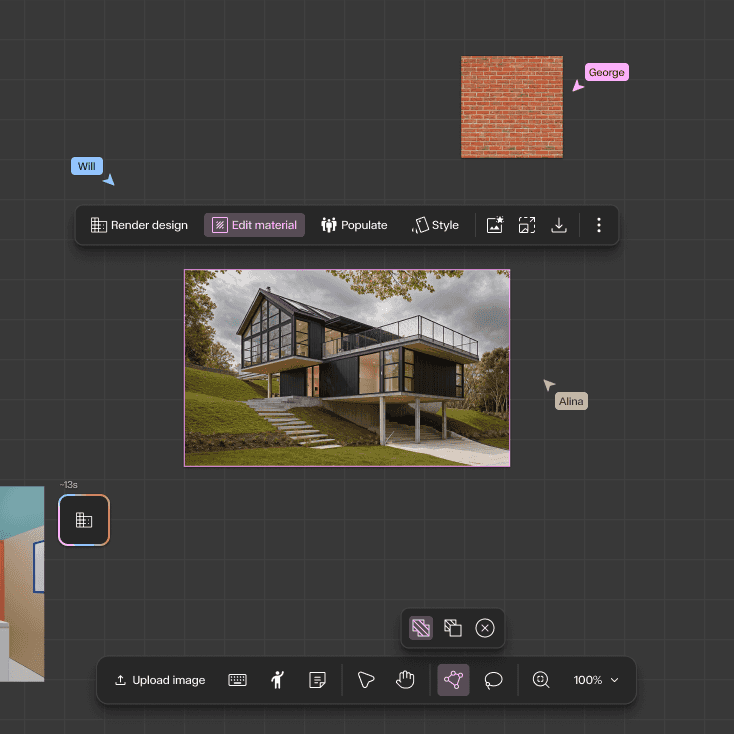
- Rapid design iteration: Gendo excels at generating multiple design variants almost instantly. Users can input a text prompt like 'modern office building with glass facade' and receive several distinct options. This accelerates the ideation phase dramatically, allowing architects to explore a wider range of concepts in a single sitting. For client presentations, this means showing diverse possibilities without spending days on manual modeling.
- Seamless export to standard tools: The ability to export generated designs to Revit, SketchUp, and Rhino formats is a game-changer for workflow integration. Instead of using AI as a standalone novelty, Gendo fits into existing architectural pipelines, allowing designers to take a generated concept and continue detailing it in their preferred software. This practical integration sets it apart from many AI image generators that output only flat images.
- Team collaboration on Professional plan: The Professional plan enables multiple users to work on the same project concurrently. This is crucial for architecture teams where several designers might need to input ideas or refine designs simultaneously. It encourages a collaborative brainstorming environment and ensures that all team members have access to the latest iterations, improving overall project coherence.
- Style transfer for existing models: Gendo's style transfer feature lets users apply different architectural styles to their existing 3D models. For example, a simple massing model can be transformed into a parametric, futuristic, or traditional design. This is a powerful tool for exploring aesthetic directions without remodeling from scratch, saving significant time during the design development phase.
- Web-based platform with no hardware demands: Since Gendo runs entirely in the cloud, users don't need a high-end GPU or specific operating system. This lowers the barrier to entry for small firms or independent architects who may not have access to powerful workstations. The accessibility means that anyone with an internet connection can start designing, making it a practical tool for freelance professionals.
⚠ Watch out for
- Starter plan limits projects to 5: For active professionals, having only 5 projects in the Starter plan is highly restrictive. Once those are filled, you cannot create new projects without deleting old ones, which is a major inconvenience. This forces users to either upgrade to a pricier plan or constantly manage their project queue, disrupting workflow. At $50/month, you'd expect more flexibility.
- No free tier or trial: There's no free trial or freemium version, which is a significant hurdle for potential adopters. In a market where many SaaS tools offer at least a 14-day free trial, Gendo's requirement for an upfront paid commitment is a tough sell. This is especially problematic for architects who are cautious about adopting new software and need to test its output quality before investing.
- Lacks API for automation and integration: The absence of an API is a major drawback for tech-savvy firms that rely on custom pipelines. Without an API, users cannot automate design generation, integrate Gendo into their existing project management tools, or build custom workflows. This limits its utility for larger organizations that value interoperability and automation.
- Output quality can be inconsistent: While Gendo generates impressive results, the output can sometimes be abstract or require significant post-editing to be practical. For instance, floor plans may lack precise dimensions and structural details, requiring manual corrections. This can be frustrating for users who need more reliable, accurate outputs, especially for preliminary design documentation.
- Limited control over detailed parameters: Users have limited control over specific design parameters such as exact dimensions, zoning constraints, or site conditions. The tool relies heavily on prompt engineering, which may not always capture nuanced requirements. This lack of fine-grained control could be a deal-breaker for architects who need to adhere to strict building codes or client specifications.
🎯 Best for
Architecture firms and individual designers who need fast, AI-driven concept generation and iteration for residential or commercial building projects.
🚫 Who should skip
Users who require extensive integrations, custom automation, or a free trial; also those needing on-the-go access via mobile devices.
📚 Learning curve
Moderate – using the AI effectively requires some experimentation with prompts and adjusting outputs, but the interface is straightforward.
🧑⚖️ Verdict
Gendo is a valuable tool for architects and designers seeking rapid conceptual exploration and iteration. Its integration with standard software and collaborative features make it a strong contender for firms embracing AI. However, the limited project count and lack of free trial or API may deter so

💰 Pricing
🔧 Features
📋 Assessment
💪 Strengths
- Mentimeter's real-time interaction features are its core strength. The ability to embed live polls, word clouds, and quizzes directly into slides transforms presentations from monologues into dialogues. For example, during a training session, you can ask a multiple-choice question and display results instantly, allowing you to gauge understanding and adjust your pace. The Q&A feature lets audience members submit questions and upvote them, ensuring the most pressing topics are addressed. This fosters engagement in ways static slides cannot.
- The AI Builder is a true timesaver. Instead of wrestling with slide layouts and content ideas, you can type a topic like 'onboarding new employees' and the AI generates a structured outline with suggested slides, complete with titles and bullet points. It also recommends design elements, applying your chosen theme consistently. For presenters who are not designers, this is invaluable—it eliminates the 'blank canvas' fear and ensures a professional look without any design skills.
- Mentimeter's template library is extensive and modern. Categories range from brainstorming to feedback, with templates for quizzes, scales, and open-ended questions. Each template is cleanly designed with responsive layouts that work on mobile devices, which is crucial since audience members often participate via smartphones. This reduces the effort needed to create visually appealing slides from scratch, and the customization options (fonts, colors, images) are sufficient for most branding needs.
- The analytics and reporting features, while gated behind higher plans, are robust. Presenters can download detailed reports of audience responses, which is invaluable for measuring understanding or collecting feedback. For training sessions, you can see individual performance on quizzes, helping you identify knowledge gaps. For client pitches, you get data on which topics resonated most. This transforms presentations from one-off events into data-gathering opportunities.
⚠ Watch out for
- The free tier is extremely limited. With a cap of 10 audience members and only 5 slides per presentation, it's barely functional for any real-world use. Even small team meetings will exceed these limits quickly. To have unlimited presentations and up to 50 audience members, you must upgrade to the Pro plan at $25/month (billed annually). This is a significant jump from free, and many users may feel forced into a subscription just to test the tool adequately.
- The highest-value features are locked behind the Business plan. Advanced branding (custom fonts and logos), full analytics, API access, and priority support require a $100/month subscription. This pricing is steep for small teams or freelancers. Many competitors offer these features at lower tiers, making Mentimeter's pricing a hard sell for budget-conscious users. Additionally, the jump from Pro to Business is substantial, and the features in each tier are not always clearly communicated.
- Mentimeter requires an internet connection for both creation and presentation. The platform is browser-based, with no offline mode or desktop app. If you're in a location with unreliable Wi-Fi, or if your audience's devices are not connected, the interactivity breaks down. This limits its use in remote or low-tech environments. For example, presenting a workshop in a rural venue without stable internet would be impossible to use real-time features.
- The AI Builder is useful but not always accurate or nuanced. When generating content, the AI may produce generic suggestions that require heavy editing to fit your specific context. For instance, if you prompt it with a complex topic, the output might be too broad or miss key details. Additionally, the AI only works within Mentimeter's slide types, so you can't easily incorporate AI-generated content into more complex multimedia presentations. This is a limitation for power users who need more control.
- Limited integration with other tools. Unlike PowerPoint or Google Slides, Mentimeter does not offer a robust ecosystem of plugins or integrations. While it does integrate with Zoom and Microsoft Teams for live polls in video meetings, there are fewer options for embedding content from other sources. This makes it less versatile for users who rely on a suite of tools like Figma, Miro, or Slack for collaboration.
🎯 Best for
Presenters and facilitators who need to quickly create interactive, audience-engaging slides with built-in polling and Q&A, especially for corporate training, education, and live events.
🚫 Who should skip
Users who require a traditional slide builder with offline editing, deep design customization, or heavy animation—or those on a tight budget who cannot justify the paid plans.
📚 Learning curve
Minimal – the AI builder guides you step-by-step, and the interface is intuitive for both presenters and participants.
🧑⚖️ Verdict
Mentimeter is a strong choice for presenters who prioritize audience interaction and engagement, particularly trainers, educators, and team leads. The AI Builder adds convenience, but the free tier is too restrictive for serious use, and the most valuable features require a significant investment. I
📊 Use Case Suitability
Higher score = better fit. Scores from editorial review.
🧭 Which One Should You Pick?
Choose Gendo if...
- You are: Architecture firms and individual designers who need fast, AI-driven concept generation and iteration for residential or
- 👍 Generates multiple design variants quickly, accelerating the ideation phase.
- 👍 Export formats allow easy integration into standard architectural workflows.
- 👍 Team collaboration in the Professional plan enables concurrent work on projects.
- 💰 From $50/mo
- ⚠ Trade-off: Starter plan is limited to only 5 projects, which may be restrictive for active
Choose Mentimeter if...
- You are: Presenters and facilitators who need to quickly create interactive, audience-engaging slides with built-in polling and Q
- 👍 AI-powered slide content and design suggestions save time and reduce formatting effort.
- 👍 Real-time audience interaction (polls, Q&A) boosts engagement during live presentations.
- 👍 Clean, modern templates and easy customization make presentations look professional without design s
- 💰 From $25/mo
- ⚠ Trade-off: Free tier severely limits presentations and audience size, making it impractical
❓ Frequently Asked Questions
What are the main differences between the Starter and Professional plans?
The Starter plan costs $50 per month and includes access to the AI model and export formats, but limits you to 5 projects. The Professional plan at $150 per month adds team collaboration and removes project limits, allowing unlimited projects.
Does Gendo offer a free trial or any free tier?
No, Gendo does not offer a free tier or free trial. You must choose a paid plan to access the tool.
Are there any hidden costs like usage-based fees?
No usage-based fees are mentioned; the pricing is fixed monthly. However, the Starter plan's 5-project limit may require upgrading to Professional if you need more projects.
🔗 More Ai Design Comparisons
🔀 Explore Alternatives
📧 Save this comparison
We'll email you a link to this comparison. No spam.