Simplifi by Quicken vs Snoop
Side-by-side comparison — pricing, features, ratings, use cases. Find which Budgeting Apps fits you best.
💰 Pricing
- Annual plan: $47.88/year (effectively $3.99/month), billed upfront.
- Monthly plan: $5.99/month.
- No additional fees for bank synchronization or transaction import.
- 30-day free trial with no credit card required.
- Automatic renewal at full annual rate after trial period ends.
- Price may increase with prior notice; no price lock for existing subscribers.
🔧 Features
📋 Assessment
💪 Strengths
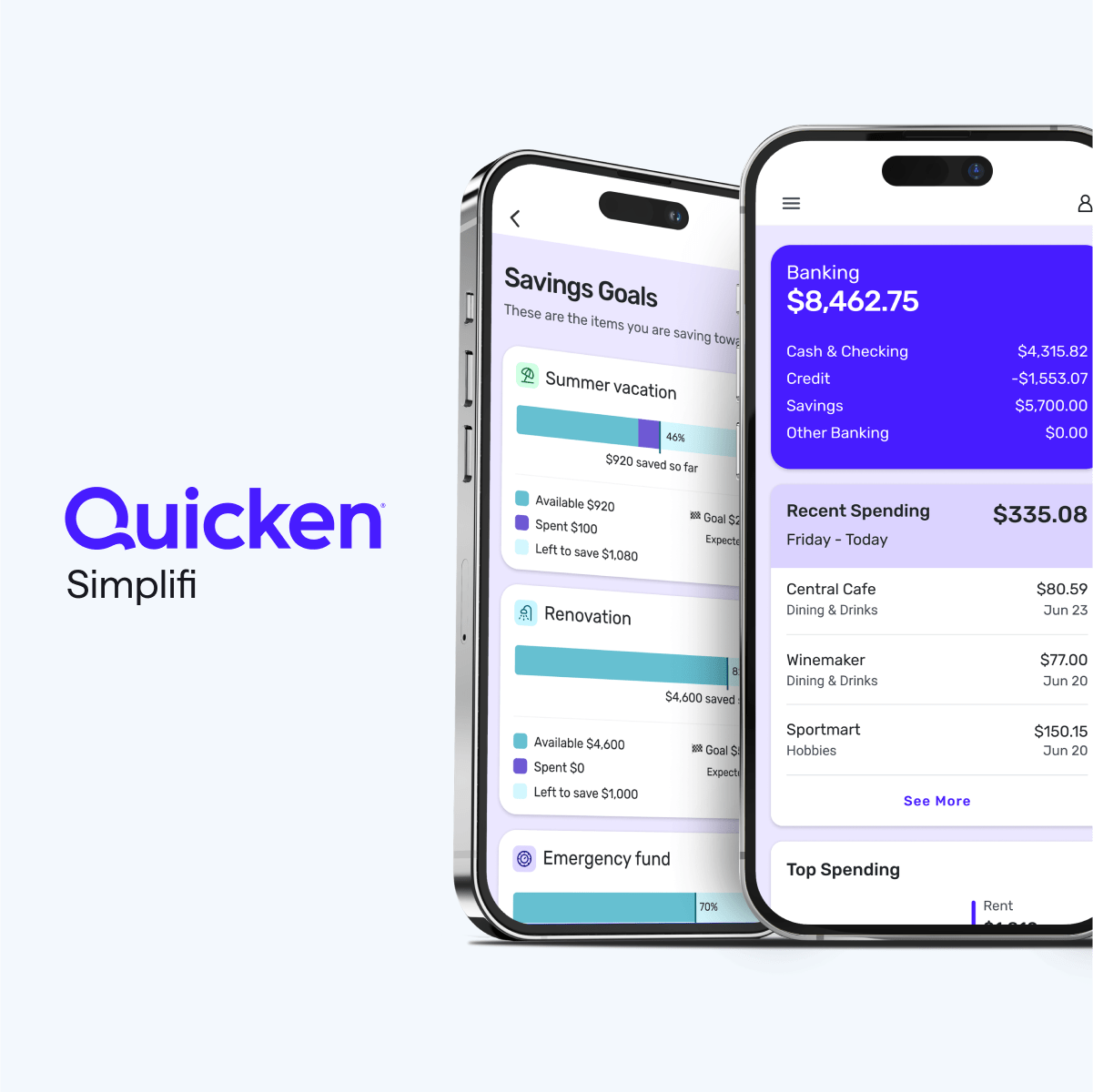
- The interface is wonderfully clean and uncluttered. Unlike classic Quicken, which can feel like a spreadsheet, Simplifi uses cards and simple lists to show you your financial picture. For example, the 'Spending Plan' shows your income minus planned bills and spending, and updates in real time as transactions come in. This makes it perfect for people who find traditional budgeting overwhelming.
- The cash flow forecast is a killer feature. It takes your upcoming bills, income, and spending habits to project your account balance day-by-day. You can see if you'll be at risk of overdrawing in two weeks or if you'll have extra cash for a splurge. This proactive insight is something few competitors offer at this price point.
- The 'Watchlist' feature lets you tag specific merchants or spending categories (like 'Starbucks' or 'Dining Out') and see how much you're spending on them each month. It's a great way to keep an eye on problematic spending without having to build a complex budget.
- Subscription monitoring is built in. Simplifi identifies recurring subscriptions (like Netflix, gym memberships, etc.) and lists them in one place. It even flags price increases or duplicate charges, which is a practical way to trim monthly expenses.
- Bank sync is generally reliable, with support for thousands of financial institutions. It also allows manual account additions, so you can track cash or accounts that don't link. The 'Pending' transaction handling is smooth, and it lets you easily split transactions (like a grocery store shopping trip that includes household items and personal items).
⚠ Watch out for
- Investment tracking is basic. You see holdings and market values, but there's no capital gains calculator, no tax-loss harvesting tool, and no in-depth performance analysis. For example, you can't see your asset allocation across accounts or drill into a specific lot's cost basis. If you're an active investor, you'll need another tool.
- No true multi-user support. The only way for couples to share is to log in with the same credentials. This is not user-friendly and can lead to sync issues if both partners are entering transactions simultaneously. You also can't set up separate roles with different permissions.
- International support is weak. The app focuses on US financial institutions and USD. If you have a foreign bank account or deal with multiple currencies, you'll be disappointed. The sync may fail, and you'll have to manually update transactions.
- The Spending Plan can be too flexible for some. Unlike envelope budgeting, it doesn't enforce hard limits. If you constantly overspend in a category, it just adjusts your plan without much friction. This is great for some, but for people who need discipline, it might not be restrictive enough.
- Customer support is average. You get email and chat support, but there's no phone line. Response times can be slow during peak seasons, and the knowledge base is thin on troubleshooting. Some users have reported that support staff lack deep technical knowledge.
🎯 Best for
Individuals or couples who want a low-effort, flexible way to track spending, monitor cash flow, and see simple investment balances without overcomplicating budgeting.
🚫 Who should skip
Investors who need portfolio-level analytics or people who prefer a hard zero-sum budgeting method like YNAB might find Simplifi too shallow.
📚 Learning curve
Minimal — most users can link accounts and set up a Spending Plan in under 30 minutes.
🧑⚖️ Verdict
Simplifi is a strong choice for budgeting beginners and those who want a simple, intuitive way to track spending and project cash flow. It's not ideal for advanced investors or couples needing true multi-user access. Bottom line: If you want a modern, flexible budgeting app with great cash flow fore

💰 Pricing
- Snoop charges no subscription or per-transaction fees for the app itself.
- Bank sync is free via Open Banking (no manual card-sync fees).
- Snoop receives affiliate commissions from energy, broadband, insurance and retailers—these come from providers, not users.
- No hidden app fees, but switching services via Snoop may incur early-exit fees from your current provider.
- Cash back offers have terms (e.g. minimum spend) that affect payout.
- Some partner products may charge setup or cancellation fees.
🔧 Features
📋 Assessment
💪 Strengths
- Completely free with no premium tier: Unlike many finance apps that lure you in with a free plan and then upsell you to a paid subscription, Snoop is 100% free. There are no hidden charges, no 'Pro' version, and no ads. This makes it an incredibly low-risk option: you have everything to gain and nothing to lose. It's a powerful differentiator in a market where apps like Emma or YNAB charge annual fees.
- Automated bill and subscription detection: Snoop's standout feature is its ability to automatically scan your connected bank accounts and credit cards to identify recurring payments. It categorizes them and highlights any that have increased in price or seem unused. For example, it might find that your broadband bill went up £10 a month or that you're still paying for a streaming service you haven't used in months. This saves users the tedious task of manually going through their statements.
- Snoop Says — personalized money-saving insights: The core of the app is the 'Snoop Says' feed, which uses AI to analyze your spending habits and provide tailored recommendations. It's not generic advice; it's specific, such as 'You could save £180 a year on your car insurance by switching to this provider' or 'Your energy tariff is ending — consider this fixed-rate deal.' This goes beyond simple transaction categorization and actively helps you make better financial decisions.
- Open Banking integration and real-time data: Snoop securely connects to your bank via Open Banking, meaning it has access to real-time transaction data without requiring manual import or CSV uploads. This ensures that your financial picture is always up-to-date, and the automatic categorization is highly accurate. It also makes setup straightforward: you just log in to your bank through the app and grant permission. There's no need to export files or manually update anything.
- Founded by an industry veteran with a clear mission: Snoop was launched by Jayne-Anne Gadhia, who previously led Virgin Money. This gives the app credibility and a user-focused brand ethos. The app is designed to be consumer-friendly, with clear explanations and a straightforward interface, which is a big plus for users who may not be financially savvy.
⚠ Watch out for
- UK-only limitation: Snoop is exclusively available to UK residents with UK bank accounts. This is a major constraint, as it excludes a huge potential user base. If you're outside the UK, you simply can't use the app. Even for UK users, it only supports banks that are part of the Open Banking scheme, though that covers most major UK banks.
- Lacks advanced budgeting and tracking features: Snoop is not a full-featured budgeting app. It does not offer envelope budgeting, income/expense forecasting, or detailed spending limits per category. If you're looking for a tool to help you stick to a monthly budget, you'll likely find Snoop insufficient. It's more of a bill-savings assistant than a comprehensive money manager.
- No credit score or credit report monitoring: Unlike apps such as ClearScore or Experian, Snoop does not provide credit score checks or alerts. This is a significant omission for users who want to monitor their credit health. The app is narrowly focused on spending, ignoring a whole aspect of personal finance.
- Savings estimates can be optimistic: While Snoop's savings estimates are based on real data from your bills and offers, they are essentially projections. The actual savings depend on whether you act on the recommendations and whether the new deals remain available. It's possible that the projected £1,500 average annual savings might not materialize for every user, especially if they are already on competitive tariffs or unable to switch due to contracts.
- Dependence on user action and Open Banking data accuracy: The recommendations are only as good as the data provided. If you don't connect all your bank accounts or if your bank has issues with data feeds, insights may be incomplete. Moreover, Snoop can only suggest savings; it can't automatically switch services for you (though it may link out to providers). Users who are not proactive will see no benefit.
🎯 Best for
UK residents who want a free, automatic way to uncover bill savings, track subscriptions, and get personalized switching suggestions without actively researching deals.
🚫 Who should skip
Anyone outside the UK, those looking for a comprehensive budgeting tool, or people who prefer to manage their finances manually without linking bank accounts.
📚 Learning curve
Minimal — the app is simple to set up via Open Banking, and most users can complete setup and start seeing savings suggestions within 10 minutes.
🧑⚖️ Verdict
Snoop is a must-have for any UK resident who wants to effortlessly reduce their monthly bills without the hassle of manual comparison. It's free, easy to use, and powerful at what it does. However, if you need a full-featured budgeting tool, credit monitoring, or are outside the UK, look elsewhere.
📊 Use Case Suitability
Higher score = better fit. Scores from editorial review.
🧭 Which One Should You Pick?
Choose Simplifi by Quicken if...
- You are: Individuals or couples who want a low-effort, flexible way to track spending, monitor cash flow, and see simple investme
- 👍 Simple and intuitive user interface that is far less cluttered than classic Quicken, making it easy
- 👍 Spending Plan is flexible and forgiving—it doesn't lock you into strict envelope budgets; it adjusts
- 👍 Cash flow projection is a standout feature, showing your expected account balance at any future date
- 💰 From $3.99/mo
- ⚠ Trade-off: Limited investment tools—no in-depth tax planning, cost basis analysis, or advan
Choose Snoop if...
- You are: UK residents who want a free, automatic way to uncover bill savings, track subscriptions, and get personalized switching
- 👍 Completely free to use with no hidden charges or premium tiers.
- 👍 Uses Open Banking to provide real-time, automatic analysis of transactions without requiring manual
- 👍 Excellent at identifying recurring bills, subscriptions, and potential savings on utilities, insuran
- 💰 Free tier available
- ⚠ Trade-off: Only available to UK residents with UK bank accounts, excluding a large internat
❓ Frequently Asked Questions
Is Simplifi a strict budget or a spending tracker?
It's a spending plan rather than a strict budget. You set planned amounts for categories, but the app emphasizes flexibility and taking action when you're over or under instead of hard limits.
Can I track investments with Simplifi?
Yes, you can link investment accounts and see balances, performance, and holdings. But it's basic—there's no advanced tax-loss harvesting, cost basis analysis, or deep retirement planning.
Does Simplifi connect to my bank accounts?
It supports thousands of US financial institutions via direct account aggregation. You can link checking, savings, credit cards, loans, and investment accounts automatically.
How much does Simplifi cost and is there a free trial?
Simplifi is $3.99 per month, typically billed annually at about $47.88 per year. There is usually a 30-day free trial so you can test it before paying.
🔗 More Budgeting Apps Comparisons
🔀 Explore Alternatives
📧 Save this comparison
We'll email you a link to this comparison. No spam.